PPE & Infection Control 🛡️
Standard Precautions · Transmission-Based Precautions · Donning & Doffing
Every barrier you put on — gloves, gown, mask, goggles — exists to stop germs moving between a contaminated surface and a clean one. Standard precautions apply to every patient, every time; transmission-based precautions stack an extra barrier on top when you know (or suspect) contact, droplet, or airborne spread. The doffing order — not donning — is the single highest-yield NCLEX point in this whole topic.
📄 Simple Nursing original — opens in Drive →
STANDARD PRECAUTIONS
STEP 1 · THE FLOOR EVERYONE STANDS ONThe baseline layer of protection used on every patient, every encounter — regardless of diagnosis or infection status.
🦠 Why this whole topic exists: nosocomial infection
Sterile & aseptic technique exist to drastically reduce (and ideally eliminate) the chance of bacteria entering a wound, catheter site, or sterile body cavity — cutting the risk of a nosocomial infection, also called a healthcare-associated infection (HAI): "nosocomial" literally means "hospital-acquired."
🧤 Gloves — when
- Touching blood, body fluids, secretions, excretions
- Touching contaminated items or surfaces
- Touching mucous membranes
- Touching non-intact skin
🥼 Gowns — when
Use during procedures & patient-care activities when contact of your clothing or exposed skin with blood, body fluids, secretions, or excretions is anticipated — think splash, spray, or heavy contact, not just a quick vitals check.
😷 Surgical mask — when
Wear a surgical mask within 3 feet (<3 ft) of a patient when respiratory secretions or splash to the face are anticipated — this is a standard-precaution mask, distinct from the N95 respirator reserved for airborne precautions (Step 2).
TRANSMISSION-BASED PRECAUTIONS
STEP 2 · ADD THE RIGHT WALLThree categories, three barriers, three sets of diseases — contact, droplet, and airborne each protect against a different way germs travel.
🚧 Contact vs. Droplet vs. Airborne — side by side
| Type | Extra barrier | How it spreads | Example diseases |
|---|---|---|---|
| 🤲 Contact | Gown + gloves for touching patient/environment | Direct or indirect touch — skin, equipment, surfaces | MRSA, VRE, C. diff, wounds, scabies |
| 💧 Droplet | Surgical mask, <3 ft or entering room | Large respiratory droplets — cough, sneeze, talking | Flu, strep, pertussis, mumps, rubella |
| 🌬️ Airborne | N95 respirator + negative-pressure room | Tiny particles that float & travel on air currents | Measles, TB, Varicella (chickenpox/shingles) |
💧 Droplet precautions — mnemonic "SPIDERMAN"
- Scarlet fever, Strep pharyngitis
- Pertussis (whooping cough), Parvovirus B19 (5th disease)
- Influenza (also contact)
- Diphtheria (pharyngeal)
- Epiglottitis (H. influenzae type b)
- Rubella (German measles)
- Mumps, Meningitis (meningococcal), Mycoplasma pneumonia
- AdeNovirus (also contact)
🌬️ Airborne precautions — mnemonic "MTV"
- Measles
- Tuberculosis (TB)
- Varicella — chickenpox and disseminated herpes zoster/shingles (airborne + contact)
🤲 Contact precautions — mnemonic "MRS WEE"
- Multidrug-resistant organisms — MRSA, VRE
- Respiratory infections — RSV, parainfluenza
- Skin infections — impetigo, lice, scabies, herpes simplex
- Wounds with excessive drainage / staph
- Enteric — C. diff, norovirus, rotavirus (soap & water only — sanitizer does NOT kill C. diff spores)
- Eye infections — conjunctivitis
🧻 Special case: C. diff needs soap & water, not sanitizer
EXAM TRAP Alcohol-based hand sanitizer does not kill Clostridioides difficile spores. For diarrheal illnesses of unknown origin or confirmed C. diff, norovirus, or rotavirus — wash with soap and water every time. Also remember Hepatitis A is spread through stool, so diapered or incontinent patients need the same enteric-contact awareness.
DONNING & DOFFING
STEP 3 · THE ORDER THAT'S TESTEDPutting PPE ON is forgiving. Taking it OFF is not — the doffing order is the single highest-yield fact in this topic.
🥼 Donning (putting ON) — outside-in
🥽 Doffing (taking OFF) — most contaminated FIRST, hand hygiene LAST
- 🧤 Gloves first — they touched the patient directly and are the most contaminated item on your body
- 🥽 Goggles / face shield next — grab by the strap/ear pieces only, never the front
- 🥼 Gown next — unfasten at the neck, pull down and away rolling it inside-out, contaminated side stays inward
- 😷 Mask / respirator last of the PPE — touch only the ties/loops, never the front panel
- 🧼 Hand hygiene — the true final step of every doffing sequence
🚨 NCLEX trap: why gloves come off first
Gloves are the single most contaminated surface on your body after patient contact — leaving them on while you touch your goggles, gown ties, or mask would transfer pathogens straight to those "cleaner" surfaces. Removing them first protects everything you touch next.
✅ Do — safe doffing habits
- Peel gloves off touching only the outside-to-outside, then tuck the second glove inside the first
- Discard PPE in the designated receptacle before leaving the room
- Perform hand hygiene immediately after the last item comes off
QUICK RECALL
SAY IT OUT LOUD🎯 Cover & check — 4 rapid-fire questions
STUDY SHEETS
FROM YOUR SAVED SET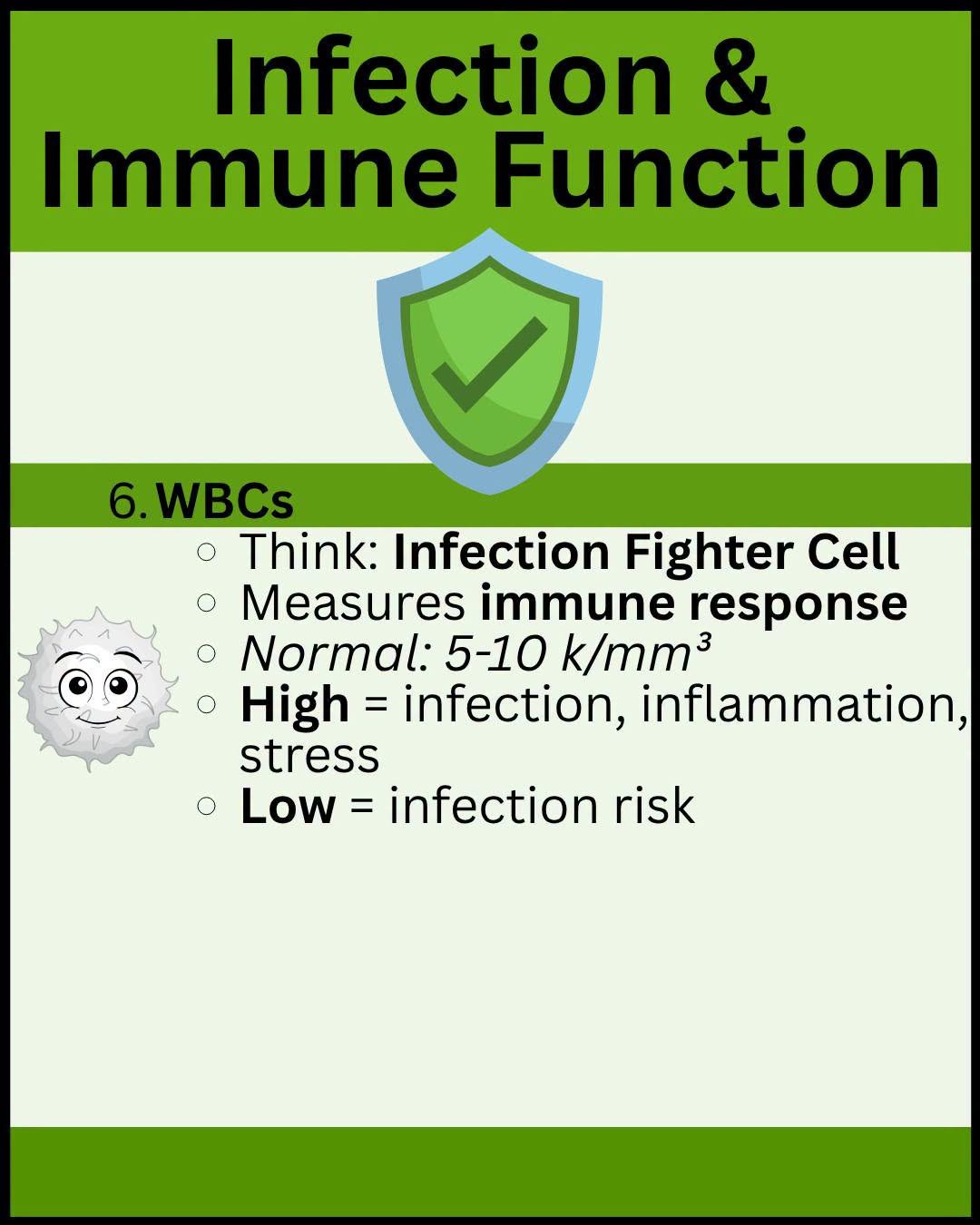
Saved study graphics from your own collection. Each one is someone else’s work — check anything clinical against your course materials before you rely on it.