🦠 Sexually Transmitted Infections
Which one is it, what treats it, and what happens if nobody catches it. Most of these are silent, which is why screening — not symptoms — is what finds them.
⭐ The one idea
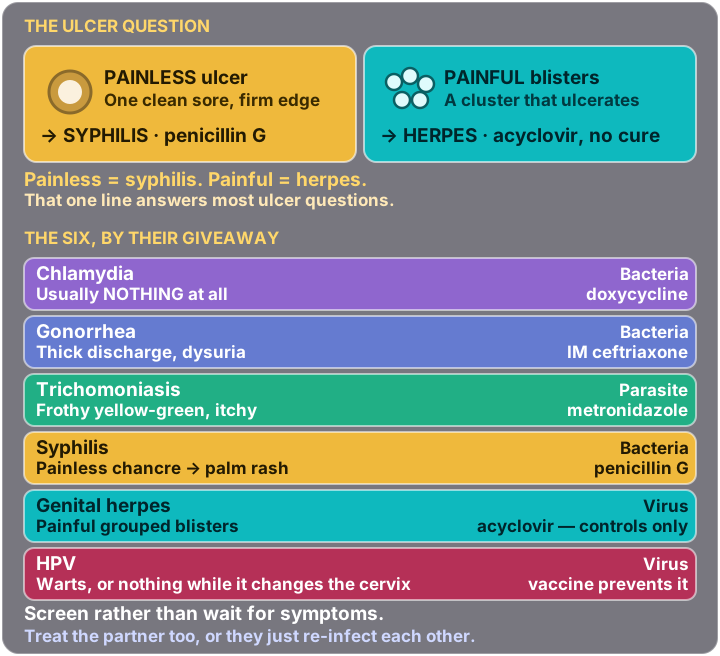
Most STIs cause no symptoms at all, especially in women. That is the whole reason screening exists. A client with no complaints is not a client without an infection, and “she had no symptoms” is never a reason not to test.
📖 The full visual handbook
Twenty-one pages, fifteen infections, each one laid out the same way — what it may look or feel like, how it spreads, testing and follow-up, treatment and aftercare, and what not to miss. Sourced from CDC guidance and reviewed September 2026.
📄 Open the STI Visual Handbook (PDF)
It goes wider than this page does: alongside the six here it covers Mycoplasma genitalium, HIV, hepatitis B and C, chancroid, lymphogranuloma venereum, pubic lice, scabies and mpox, plus a page on related conditions and two pages of references.
👀 What each one looks like
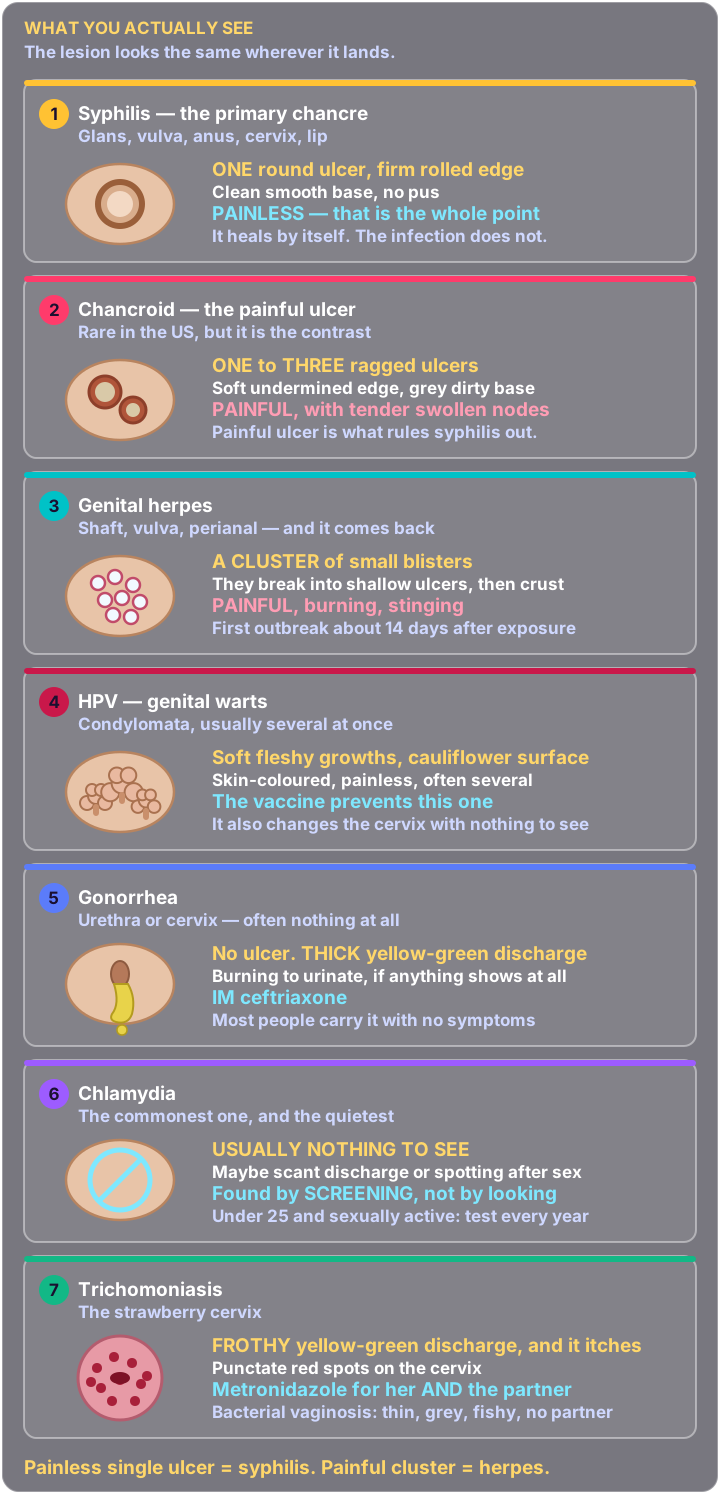
Three ulcers, told apart by one question. Does it hurt?
- One, painless, firm rolled edge → syphilis
- A cluster of small blisters, painful → herpes
- One to three ragged ulcers, painful, soft edge → chancroid
And two that show no lesion at all — gonorrhea gives thick discharge, chlamydia usually gives nothing. That is not reassurance; it is the reason for screening.
🔍 Telling them apart
| Infection | What gives it away | Organism | First-line treatment |
|---|---|---|---|
| Chlamydia | Usually nothing at all. Otherwise discharge, dysuria, postcoital bleeding | Bacteria | Doxycycline (azithromycin in pregnancy) |
| Gonorrhea | Often silent too; otherwise thick discharge and dysuria | Bacteria | IM ceftriaxone — resistance is a real problem |
| Trichomoniasis | Frothy yellow-green discharge, itching, “strawberry cervix” | Parasite | Metronidazole — client and partner |
| Syphilis | Painless chancre, then a rash that includes the palms and soles | Bacteria | Benzathine penicillin G, dose by stage |
| Genital herpes | Painful grouped blisters that ulcerate; recurs for life | Virus | Acyclovir or valacyclovir — controls, never cures |
| HPV | Genital warts, or nothing at all while it changes the cervix | Virus | Treat the warts; the vaccine is the real answer |
🦠 Herpes: the numbers that get asked
| HSV type 1 | HSV type 2 | |
|---|---|---|
| Usually | Cold sores around the mouth | Genital herpes |
| Course | An episode clears on its own in about 10–14 days | Recurs for life |
| First outbreak | About 14 days after exposure | |
| Cure? | No. Acyclovir shortens and suppresses episodes — it never clears the virus | |
“With medication I will be able to cure my herpes” always signals a client who needs more teaching. Either type can appear in either place through oral sex.
🚨 The two discharges students mix up
| Trichomoniasis | Bacterial vaginosis | |
|---|---|---|
| Discharge | Frothy, yellow-green | Thin, grey-white |
| Smell | Can be foul | Fishy, worse after sex |
| Itch | Yes, and it is sore | Usually not |
| Sexually transmitted? | Yes — treat the partner | No — an overgrowth, partner not treated |
| Treatment | Metronidazole, both people | Metronidazole, her only |
Same drug, different rule about the partner. That is what the question is usually testing.
📜 The rest of the list
Six cover most exam questions, but these turn up too — and two of them are the reason “treated but still symptomatic” happens.
| Infection | What to know |
|---|---|
| Mycoplasma genitalium | Bacterial. A common cause of urethritis and cervicitis that persists after the usual treatment, because resistance is widespread. Suspect it when symptoms continue after doxycycline |
| HIV | Viral, treatable, not curable. Test everyone 13–64 at least once. PrEP before exposure; PEP must start within 72 hours after one |
| Hepatitis B | Viral, vaccine-preventable, and screened at the first prenatal visit. A newborn exposed at birth gets vaccine and immune globulin |
| Hepatitis C | Viral, mainly blood-borne, and now curable with direct-acting antivirals |
| Chancroid | Bacterial. The painful ragged ulcer — the contrast that makes the painless syphilitic chancre memorable. Rare in the US |
| Lymphogranuloma venereum | Invasive strains of chlamydia. A small painless ulcer, then large tender inguinal nodes, or proctitis |
| Pubic lice and scabies | Ectoparasites, both curable. Itching worse at night; treat close contacts and launder bedding and clothes in hot water |
| Mpox | Viral, usually self-limited, spreads by close contact including sex. Vaccine available for eligible people |
🧪 What gets tested, and when
- NAAT for chlamydia and gonorrhea — urine or a swab, from every site of exposure: genital, rectal and pharyngeal. A negative urine test does not clear a throat infection.
- Syphilis: screen with RPR or VDRL, confirm with a treponemal test. One test alone is not a diagnosis.
- Herpes: PCR or culture from the lesion, taken while it is still fluid-filled.
- Trichomonas: wet mount or NAAT.
- Diagnose one, test for the rest — including HIV and hepatitis B and C. Having one STI raises the risk of every other.
- Possible HIV exposure: PEP has to start within 72 hours. That is a same-day problem, not a next-appointment one.
📅 Routine screening
- Chlamydia and gonorrhea annually in all sexually active women under 25, and older women with risk factors
- Everyone 13–64 tested for HIV at least once; more often with ongoing risk
- Syphilis, HIV and hepatitis B at the first prenatal visit, repeated in the third trimester if at risk
- HPV vaccine at 11–12, available from age 9 and caught up to 26 — it works by being given before exposure, which is why it is offered years before anyone expects it to be needed
- Annual Pap alongside it — the vaccine does not replace screening
🤰 In pregnancy — where the stakes change
Syphilis crosses the placenta
It can cross at any stage and cause stillbirth, prematurity, or congenital syphilis in a baby who looks well at birth and is damaged months later. So it is screened for repeatedly, not once.
| Screen for syphilis | When |
|---|---|
| Everyone | At the first prenatal visit |
| Everyone | Again in the third trimester |
| Higher risk | Again at delivery |
🚨 Penicillin is the only treatment that works in pregnancy
Doxycycline is teratogenic and the alternatives do not reliably cross the placenta to treat the fetus. Penicillin is the only option, so a reported allergy does not change the drug — it changes the route in.
- Assess what kind of reaction it was. A rash decades ago is not anaphylaxis, and most reported penicillin allergy is not true allergy.
- If it is genuine, the answer is penicillin desensitization — tiny escalating doses under supervision — then treat.
- Teach her why. The reason to accept the drug is what happens to the baby without it.
“Give a different antibiotic” is the wrong answer in pregnancy. Desensitize and give the penicillin.
Herpes at the time of birth
Active genital lesions at term mean a cesarean birth. Neonatal herpes is devastating, and a baby passing through an actively shedding birth canal is how it happens.
- Report active lesions in pregnancy to the provider — it is a priority, not a “mention it at the next visit”
- Do not touch the lesions; wash hands afterwards every time
- Keep them clean and dry; avoid scented soaps
- No sex while lesions are present — and condoms do not make it safe, because the virus sheds from skin a condom does not cover
🚨 What happens if nobody catches it
Pelvic inflammatory disease
Untreated chlamydia or gonorrhea climbs from the cervix into the uterus and tubes.
The finding that names it: cervical motion tenderness — moving the cervix on exam hurts. With lower abdominal pain, fever and discharge, that is PID.
Scarred tubes do not unscar. PID leaves infertility, chronic pelvic pain, and a permanently raised risk of ectopic pregnancy — which is why a silent chlamydia infection at 19 matters at 30.
The rest of the damage
- Untreated syphilis goes quiet for years, then returns as neurosyphilis and cardiovascular syphilis. Latent does not mean gone.
- In pregnancy — congenital syphilis, neonatal conjunctivitis and pneumonia from chlamydia, and neonatal herpes, which is why active lesions at term mean a cesarean birth.
- HPV causes cervical cancer, and anal, oropharyngeal and penile cancers too.
- Any STI raises HIV transmission — broken mucosa is a doorway.
🩺 What the nurse actually does
Taking the history
Ask directly, routinely and without flinching. Partners, practices, protection — asked the same way you ask about anything else. Your comfort is what decides whether she tells you the truth, and a client who senses judgment gives you a useless history.
Ask about every site of exposure, because that is where you swab.
Teaching, every time
- Finish the whole course, even once the symptoms stop
- The partner is treated too — otherwise they hand it back and forth
- No sex for 7 days after starting treatment — and not until the partner has been treated too, not until one of them feels better
- All sex — oral and anal included. “We avoided vaginal sex but oral was fine” is a classic wrong answer
- Come back for a test of cure where one is indicated, and retest in 3 months — reinfection is common
- Condoms every time — but say plainly that they reduce and do not remove herpes and HPV risk. Both spread by skin-to-skin contact outside what a condom covers, and HPV transmits while the person has no symptoms at all
- Several of these are notifiable to public health; partner notification is part of the treatment, not a betrayal of confidence
🎯 NCLEX traps
- Painless ulcer = syphilis → penicillin. Painful blisters = herpes.
- Cervical motion tenderness = PID
- Chlamydia is usually silent — screen under 25 annually
- Antivirals control herpes; nothing cures it
- The HPV vaccine is given before exposure — at 11–12
- Trichomonas: treat the partner. Bacterial vaginosis: do not
- Swab every site of exposure, not just the genital one
- Rash on the palms and soles → think secondary syphilis
- Penicillin allergy in pregnancy → desensitize, do not substitute
- No sex for 7 days after starting treatment — and that includes oral
- Active herpes lesions at term → cesarean birth
- HSV type 1 = mouth, type 2 = genital; first outbreak about 14 days after exposure
📄 Your Simple Nursing handouts
The two you saved for this topic. They open in your Drive.
- Syphilis & Chlamydia — the stages, prenatal screening, and penicillin desensitization · save it
- Gonorrhea, HSV & HPV — the herpes numbers, active lesions at birth, and HPV prevention · save it