🏠 Study Hub 🖼️ Infographics
Nursing Field Notes / Musculoskeletal ยท Med-Surg Course

Rotator Cuff Injury ๐Ÿ’ช

SITS Muscles ยท Impingement ยท Conservative vs. Surgical Repair

NG-219 Musculoskeletal ADHD-friendly visual edition

The rotator cuff is a team of 4 tendons that let the arm lift & rotate at the shoulder. When one is violently stretched or torn โ€” suddenly (a fall) or slowly (years of overhead repetition) โ€” the client gets shoulder pain with abduction or rotation. Care runs from RICE to arthroscopic repair depending on how bad the tear is.

📄 Simple Nursing original — opens in Drive →

๐ŸŽฏ SITS = the 4 musclesSupraspinatus ยท Infraspinatus ยท Teres minor ยท Subscapularis.
๐Ÿ’ฅ Pain with abduction/rotationThe hallmark symptom โ€” lifting the arm out to the side or twisting it hurts.
๐ŸงŠ RICE, with a twistRest ยท Ice ยท Compress ยท Sling instead of elevate for the shoulder.
๐Ÿ”ฌ MRI/X-rayLook for bone spurs or a narrowed space between humerus & acromion.
๐Ÿงจ

CAUSE

STEP 1 ยท FOUR TENDONS, ONE JOB

The rotator cuff stabilizes the shoulder & drives its rotation โ€” tear or stretch any one of its tendons and that motion hurts.
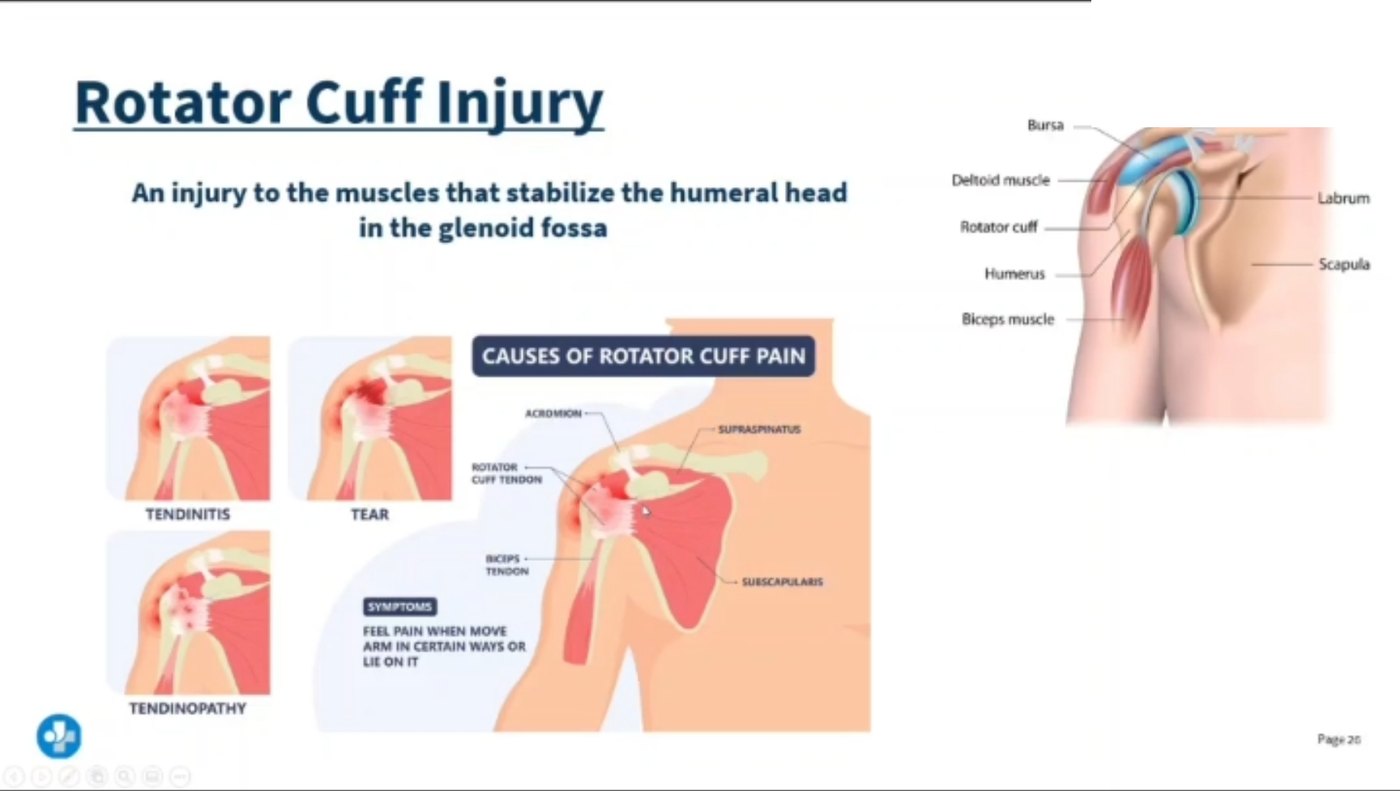
Lecture slide on rotator cuff injury showing the shoulder anatomy with the acromion, bursa, deltoid, rotator cuff, humerus, biceps muscle, labrum and scapula, and three causes: tendinitis, tear and tendinopathy.
From your lecture. An injury to the muscles that stabilize the humeral head in the glenoid fossa. Pain on moving the arm a certain way, or on lying on it.

๐ŸŽฏ SITS โ€” the 4 rotator cuff muscles

Supraspinatus top โ€” initiates abduction Infraspinatus back โ€” external rotation Teres minor below infraspinatus โ€” ext. rotation Subscapularis front, against ribs โ€” internal rotation Together: stabilize the humeral head & rotate the arm
๐Ÿง  "SITS" โ€” Supraspinatus (top, starts abduction) ยท Infraspinatus (back, rotates out) ยท Teres minor (back, rotates out) ยท Subscapularis (front, rotates in). Picture someone SITS-ting with their arm cradled โ€” that cradle is the cuff.

๐Ÿ’ฅ Acute cause โ€” sudden & violent

  • ๐Ÿ‹๏ธ Lifting something heavy with poor mechanics
  • ๐Ÿคธ Falling on an outstretched arm (FOOSH)
  • A tendon is violently stretched or torn in one moment
๐Ÿง  Sudden pop after a fall or a heavy lift = think acute rotator cuff tear until proven otherwise.

๐Ÿ” Chronic cause โ€” years of the same motion

  • โšพ Baseball pitchers
  • ๐ŸŽพ Tennis players
  • ๐ŸŠ Swimmers
  • ๐ŸŽจ Anyone with repetitive overhead work (painters, mechanics)

Repeating the same overhead motion for years wears the tendon down slowly instead of tearing it all at once.

๐Ÿง  "Overhead over and over." If the history is a repetitive overhead sport or job, think chronic, degenerative cuff wear rather than one traumatic event.

โš™๏ธ Mechanism: impingement โ€” squeezing the tendon in a tight space

โœ… NORMAL SPACE tendon glides freely under acromion โš ๏ธ IMPINGEMENT arm raised โ†’ tendon pinched & painful

Raising (abducting) the arm narrows the space between the humerus (arm bone) and acromion (tip of the shoulder blade). A worn or inflamed tendon gets pinched in that narrow space โ€” that pinch is impingement, and it's why abduction & rotation hurt the most.

๐Ÿ”Ž

CLUES

STEP 2 ยท SPOT IT

One hallmark symptom, plus imaging that looks for the anatomy behind the pain.

๐Ÿ’ฅ Hallmark: shoulder pain with arm abduction or rotation

"PAINFUL ARC" 60ยฐโ€“120ยฐ most painful zone of abduction 0ยฐ arm at side
  • Pain worsens as the arm is raised out to the side (abduction) or twisted (rotation)
  • Weakness lifting the arm, especially overhead
  • Night pain, often worse lying on the affected shoulder
๐Ÿง  "Reach and it screeches." If raising or rotating the arm is what reproduces the pain, think rotator cuff before anything else in the shoulder differential.

๐Ÿ”ฌ Diagnostics

  • X-ray โ€” can show bone spurs
  • MRI โ€” best for soft tissue: shows the tendon tear itself & a narrowed acromiohumeral space (the gap between the humerus and the acromion, the bony tip of the shoulder blade)
๐Ÿง  X-ray = bone, MRI = the tendon & the space it's stuck in.

๐Ÿ“Š Acute vs. chronic presentation

Acute tearChronic tear
Sudden onset โ€” fall or heavy liftGradual โ€” years of overhead repetition
Sharp pain, often a "pop"Dull ache that slowly worsens
Younger, traumatic mechanismOlder or repetitive-use athletes/workers
๐Ÿฉบ

CARE

STEP 3 ยท CONSERVATIVE FIRST, SURGERY IF NEEDED

Most rotator cuff injuries start conservative โ€” surgery is reserved for full-thickness tears or failed conservative treatment.

๐ŸงŠ Conservative management: RICE โ€” with one shoulder-specific swap

LetterStandard RICEShoulder version
RRestRest โ€” avoid aggravating overhead motion
IIceIce the joint to control pain & inflammation
CCompressCompression as tolerated
EElevateSling instead of elevate โ€” a shoulder can't be "elevated" like a limb; immobilize in a sling to rest the joint
๐Ÿง  "RICE, but the shoulder gets a sling, not a lift." Every other joint in this series gets elevated above the heart โ€” the shoulder is the exception because there's nowhere higher to elevate it to. Support it in a sling instead.

๐Ÿ’Š Additional conservative measures

  • NSAIDs for pain & inflammation
  • Physical therapy โ€” strengthen the cuff & scapular stabilizers
  • Corticosteroid injection for persistent inflammation
  • Activity modification โ€” avoid the repetitive overhead motion that caused it

๐Ÿ”ช Surgical management

  • Arthroscopic rotator cuff repair โ€” for full-thickness tears or when conservative treatment fails
  • Post-op: sling immobilization initially, then gradual, PT-guided range of motion
  • Teach: avoid lifting or reaching overhead until cleared by the surgeon/PT
๐Ÿง  Surgery repairs the torn tendon; it does not fix poor mechanics โ€” PT afterward is what prevents the next tear.

๐Ÿฉน Post-op / rehab priorities

1
๐Ÿงท Immobilize in sling as prescribed โ€” protects the healing repair
2
๐Ÿฅถ Ice for pain & swelling control
3
๐Ÿƒโ€โ™€๏ธ Gradual PT-guided motion โ€” passive first, active later, per surgeon protocol
4
โŒ No overhead lifting until cleared
โšก

QUICK RECALL

SAY IT OUT LOUD
๐ŸŽฏ SITSSupraspinatus, Infraspinatus, Teres minor, Subscapularis
๐Ÿ’ฅ Pain w/ abduction/rotationthe hallmark symptom
๐ŸงŠ RICE + slingrest, ice, compress, sling instead of elevate
๐Ÿ”ฌ MRItendon tear + narrowed acromiohumeral space
๐ŸŽฏ Cover & check โ€” 4 rapid-fire questions
Q1: Name the 4 rotator cuff muscles.
Supraspinatus, Infraspinatus, Teres minor, Subscapularis โ€” "SITS."
Q2: What is the hallmark symptom of a rotator cuff injury?
Shoulder pain with arm abduction or rotation.
Q3: How does RICE change for a shoulder injury?
Rest, ice, and compression stay the same, but a sling is used instead of elevation.
Q4: What does impingement mean in this context?
Raising the arm narrows the space between the humerus and the acromion, pinching the tendon (often the supraspinatus) in that space and causing pain.