Compartment Syndrome 🩸
The 6 P’s · Pressure in a closed space · Fasciotomy
Muscle lives inside a closed sleeve of fascia that does not stretch. Swell the contents and the pressure inside rises until it exceeds the pressure feeding the tissue — then the muscle and nerve start to die while the pulse is still there. Pain out of proportion is the earliest sign, and a normal pulse never rules this out.
🧨 What starts it
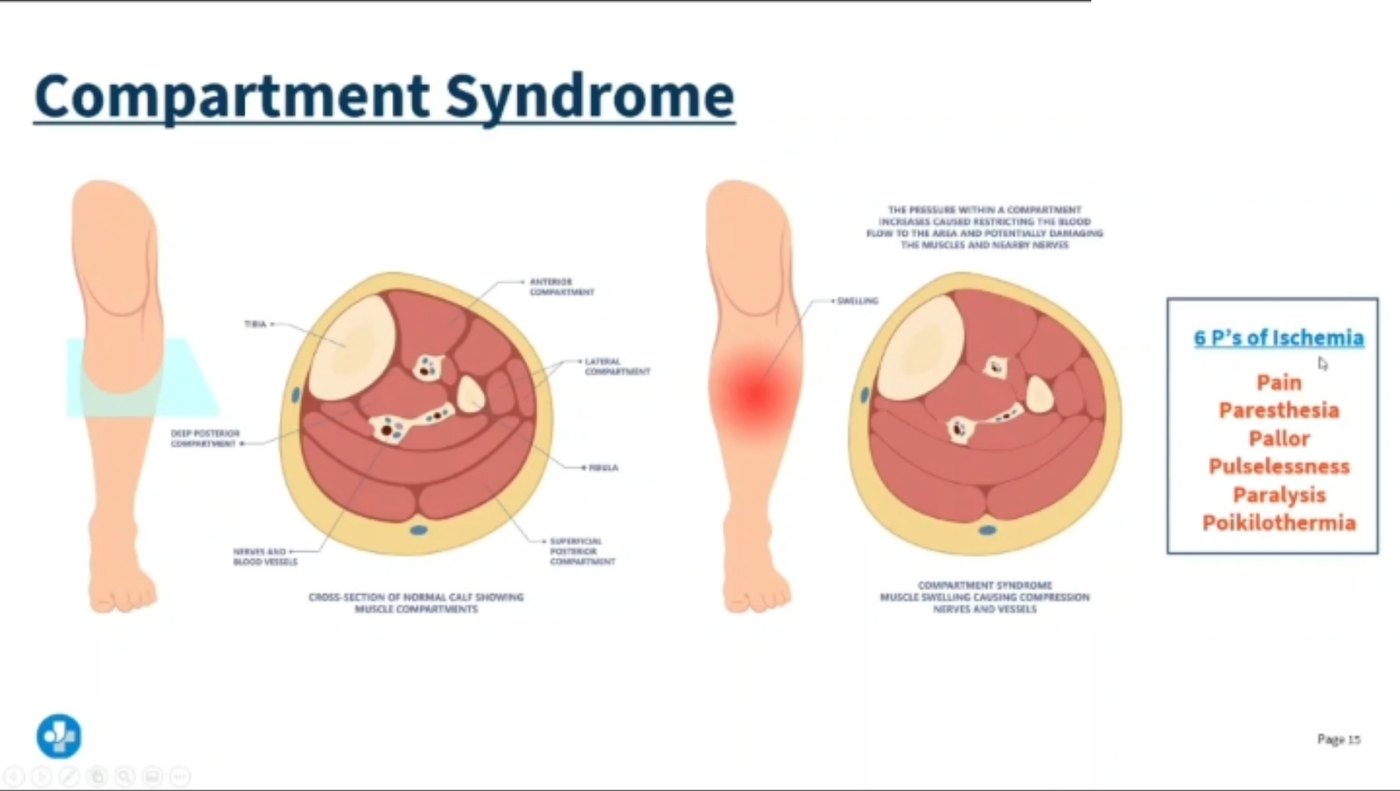
- Fracture is the commonest trigger — especially tibia and forearm.
- Crush injury, and the swelling that follows reperfusion once flow is restored.
- A cast or dressing that is too tight, or a circumferential burn eschar.
- Bleeding into the compartment — anticoagulation raises the risk.
The compartment does not have to be hit directly. Anything that adds volume inside it, or shrinks it from outside, does the same thing.
Normal compartment pressure is under 10 mm Hg. Concern begins around 30 mm Hg, or when it comes within 30 mm Hg of the diastolic pressure.
Muscle tolerates ischemia for about 4 to 6 hours. After that the damage is permanent. This is a same-shift emergency, not a same-day one.
🔎 What you will see
- Pain — out of proportion to the injury, worse on passive stretch, and not relieved by opioids. This is the one that shows up first.
- Paresthesia — numbness and tingling, the second nerve sign.
- Pallor, then Poikilothermia — the limb goes pale and cool.
- Paralysis and Pulselessness — these are LATE. By the time the pulse is gone the muscle is already dying.
Students wait for the pulse to disappear. A present pulse does not rule out compartment syndrome — arterial pressure is far higher than the compartment pressure that strangles capillaries.
Tense, firm, shiny skin over the compartment. Ask her to wiggle the toes or fingers — that hurts long before anything else changes.
🩺 What you do
- Loosen or bivalve the cast, cut the dressing — do this first, it costs seconds.
- Keep the limb at heart level. Do not elevate above the heart — it lowers arterial inflow and makes the ischemia worse.
- No ice. Cold vasoconstricts, and that is the opposite of what this limb needs.
- Notify the provider immediately and expect compartment pressures to be measured.
- Definitive treatment is a fasciotomy — the fascia is cut open and left open.
Released muscle dumps its contents into the blood. Watch for rhabdomyolysis, hyperkalemia and acute kidney injury.
Volkmann’s contracture — the dead muscle fibroses and pulls the hand into a permanent claw. It is not reversible.