Paget’s Disease of Bone 🦴
Fast, disorganized remodeling · Big bone that is weak · Alk phos
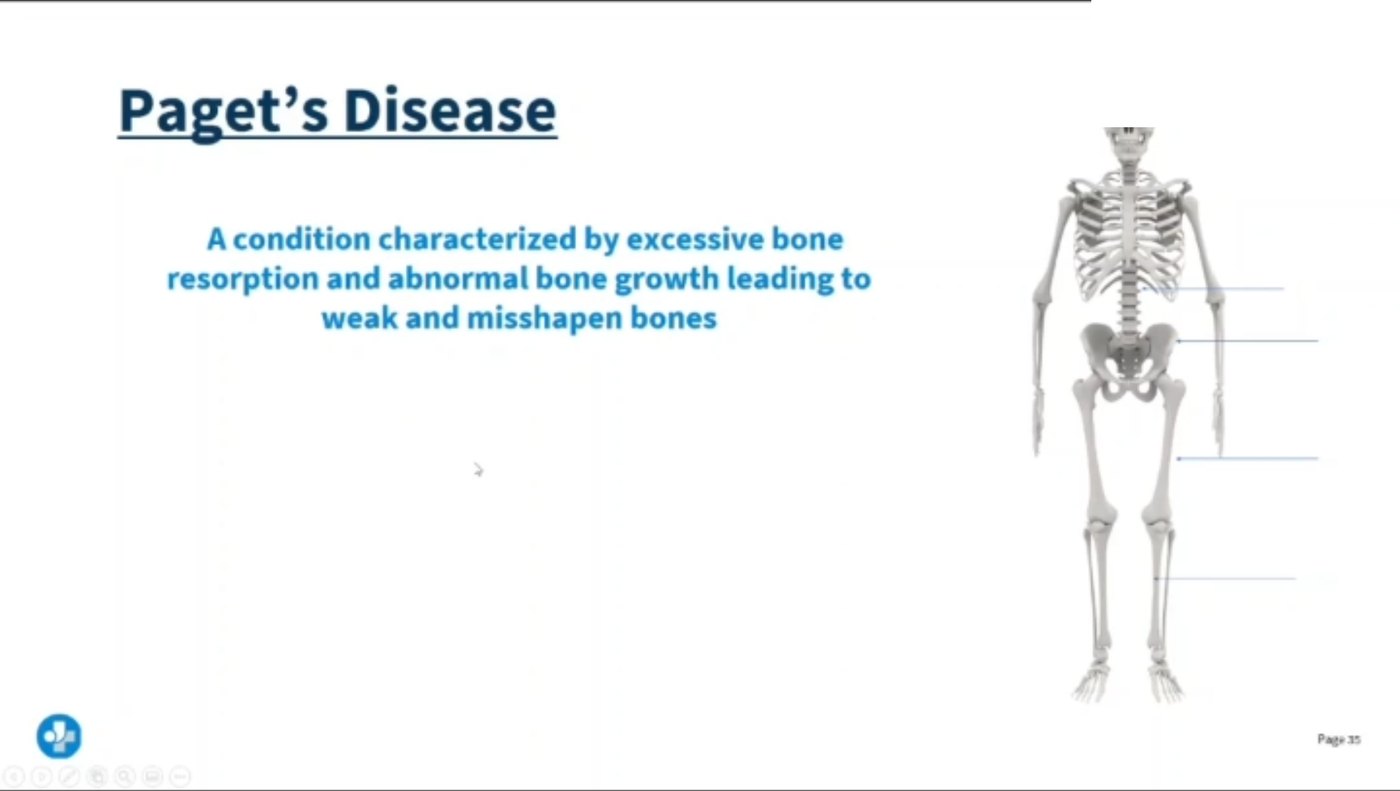
Bone is normally torn down and rebuilt in balance. In Paget’s the tearing down goes too fast, and the rebuilding is rushed and disorganized. The result is bone that is bigger but weaker — thick, bowed and prone to fracture. Most people have no symptoms; it is found on an X-ray or on a raised alkaline phosphatase.
🧨 What starts it
- Overactive osteoclasts resorb bone far too quickly.
- Osteoblasts overshoot trying to keep up, laying down disorganized woven bone instead of orderly lamellar bone.
- The new bone is bigger, thicker, more vascular — and mechanically weak.
Cause is not settled: a genetic component plus a possible slow viral trigger. It is commoner over 50 and in men.
Pagetic bone is highly vascular. That matters before surgery — expect more blood loss, and the surgeon may pretreat to calm it down.
All that extra blood flow through bone can drive a high-output heart failure when the disease is widespread.
🔎 What you will see
- Often nothing — found incidentally on X-ray or a routine alk phos.
- Bone pain, deep and aching, worse at night and at rest.
- Bowing of the legs, kyphosis, an altered gait.
- Skull enlargement — the classic line is that the hat no longer fits.
- Hearing loss, as overgrown skull bone compresses cranial nerve VIII.
- Pathologic fracture through the weakened bone.
Alkaline phosphatase is markedly high — the marker of turnover, and what is used to track treatment. Calcium and phosphate are usually normal. Urinary hydroxyproline rises.
X-ray shows thickened, coarse, disorganized bone. A bone scan shows how much of the skeleton is involved.
🩺 What you do
- Bisphosphonates are the mainstay — they shut down the overactive osteoclasts. Same administration rules as always: first thing, full glass of water, upright 30 minutes, nothing else by mouth.
- Calcitonin when bisphosphonates cannot be used.
- Calcium and vitamin D alongside, so the remodeling has raw material.
- Analgesia — NSAIDs for the bone pain.
- Physical therapy, assistive devices, and fall prevention; braces for the bowing.
- Surgery for fracture, severe deformity or joint replacement.
Follow the alkaline phosphatase — a falling level means the treatment is working.
Osteosarcoma develops in under 1%. A sudden change in pain, or new swelling in an affected bone, gets investigated.