Rhabdomyolysis 💥
Muscle breaks down · Myoglobin hits the kidney · Fluids first
Skeletal muscle is destroyed and its contents spill into the blood: myoglobin, potassium and creatine kinase. The myoglobin clogs the renal tubules and the potassium threatens the heart. The urine goes dark brown, and the treatment is aggressive IV fluid before anything else.
🧨 What starts it
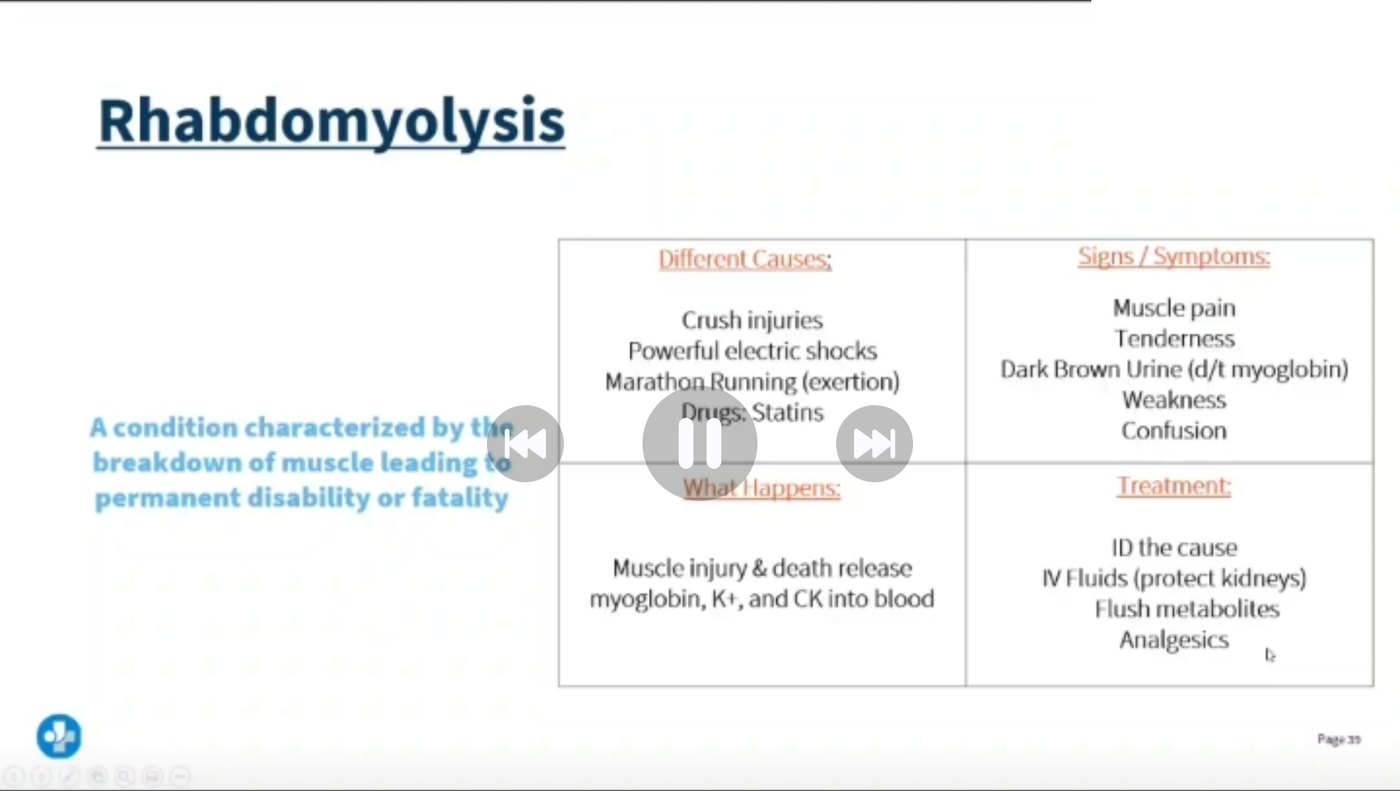
- Crush injury, and long down-time after a fall — the older adult found on the floor.
- Extreme exertion — marathons, military training, and status epilepticus.
- Electric shock, lightning, and severe burns.
- Statins — especially with a fibrate, and the reason unexplained muscle pain on a statin gets a CK.
- Heat stroke, malignant hyperthermia, neuroleptic malignant syndrome.
- Compartment syndrome, and the reperfusion after it is released.
Muscle cell ruptures → myoglobin filters into the tubules and plugs them → acute kidney injury. Meanwhile intracellular potassium and phosphate flood the blood and calcium falls.
Two ways: hyperkalemic arrest early, and acute kidney injury over the following days.
🔎 What you will see
- Muscle pain, tenderness, swelling and weakness — though up to half have no muscle symptoms at all.
- Dark brown, tea or cola colored urine — this is the classic tell.
- Confusion, nausea, fever, and falling urine output.
Dipstick reads “blood” positive but microscopy shows no red cells — that mismatch is myoglobin.
CK sharply raised — over five times normal, often in the tens of thousands. High potassium, high phosphate, low calcium, rising creatinine and BUN, myoglobin in the urine.
Hyperkalemia gives peaked T waves, then a widening QRS. Put her on a cardiac monitor before you go looking for anything else.
🩺 What you do
- Aggressive IV fluids first — large-volume isotonic crystalloid to flush the tubules and keep urine flowing. This is the single intervention that saves the kidneys.
- Monitor potassium and the ECG, and treat the hyperkalemia on its own protocol.
- Strict intake and output, hourly urine, and daily weights.
- Follow CK, creatinine, potassium, calcium serially.
- Stop the cause — hold the statin, cool the hyperthermia, release the compartment.
- Analgesia; dialysis if the kidney injury is severe or the potassium will not come down.
The calcium is low, but it is usually not replaced unless she is symptomatic or the potassium is dangerous — it tends to rebound high during recovery.
Compartment syndrome can be both the cause and the consequence — swelling in a reperfused limb. Recheck the limb.