Acne 🧴
The pilosebaceous unit · Three factors · Isotretinoin safety
Acne is a chronic inflammatory condition of the pilosebaceous unit — the hair follicle and its oil gland. Three things have to line up: too much sebum, a follicle that plugs itself, and bacteria multiplying in the plugged space. Most of what people blame — chocolate, greasy food, poor hygiene — is not on the list.
🧨 What starts it
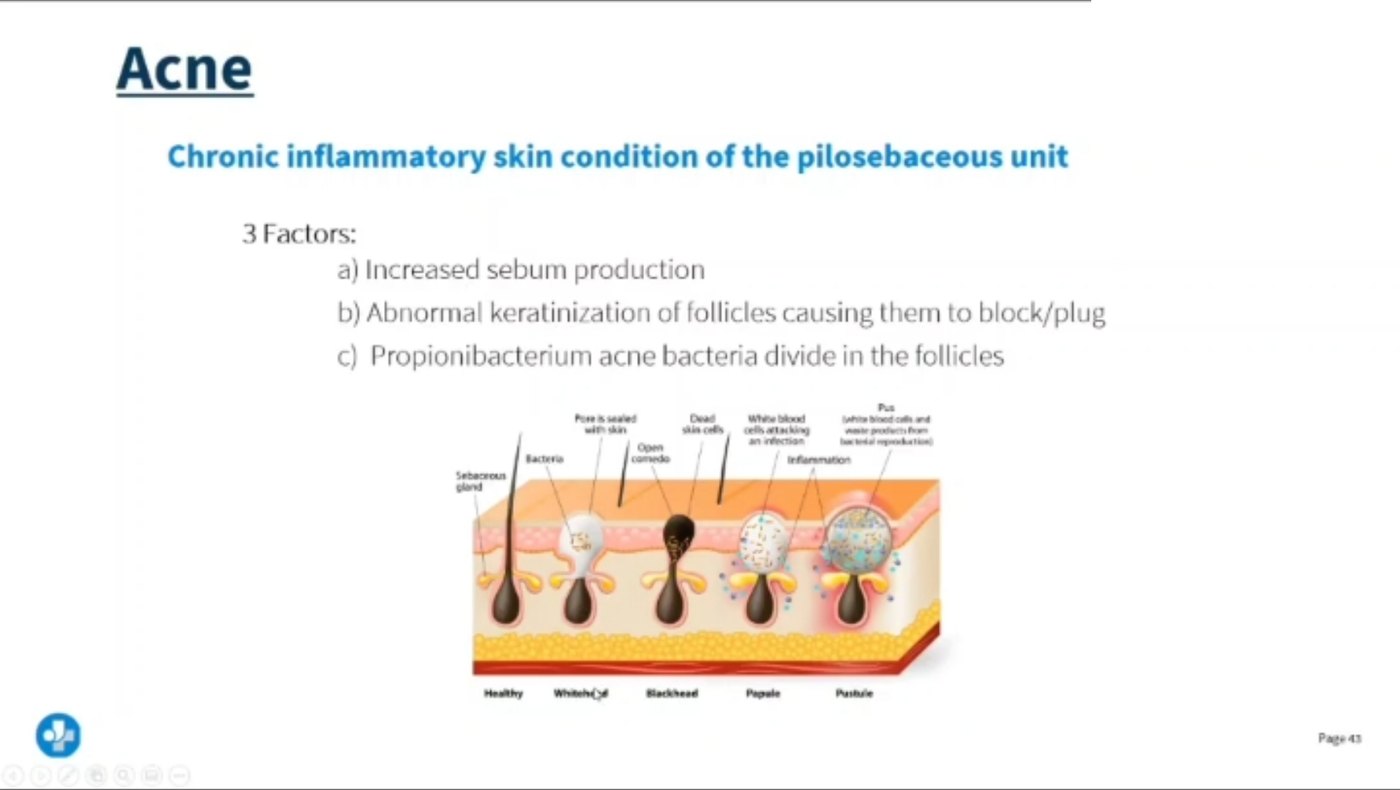
- Increased sebum production — androgen-driven, which is why it starts at puberty and flares premenstrually.
- Abnormal keratinisation — the follicle lining sheds cells that stick together and plug the opening.
- Cutibacterium acnes (still written Propionibacterium acnes on many slides) multiplies in the trapped sebum and triggers inflammation.
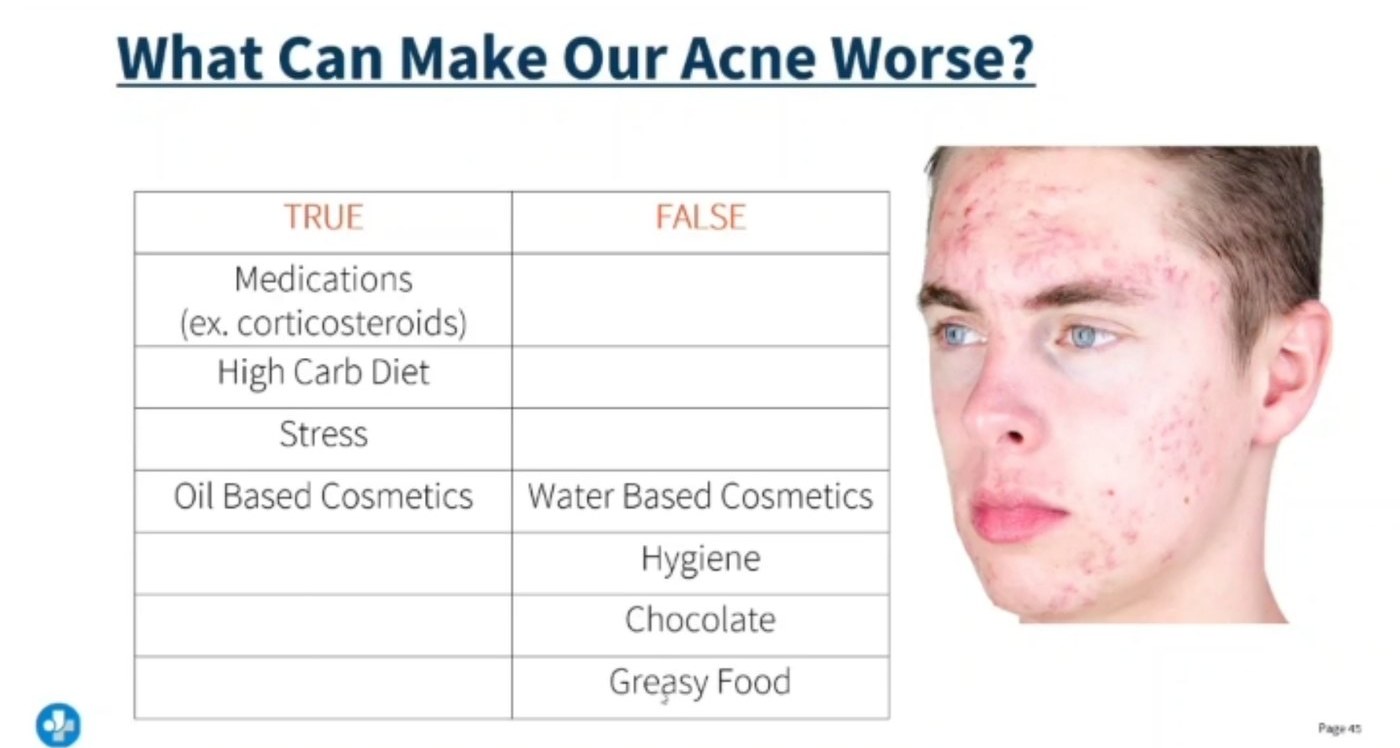
Their true list: medications such as corticosteroids, a high-carbohydrate diet, stress, and oil-based cosmetics.
Water-based cosmetics, hygiene, chocolate and greasy food were all scored FALSE. Scrubbing harder makes it worse, not better.
🔎 What you will see
- Comedones — the plugged follicle. Open = blackhead (dark from oxidized keratin, not dirt). Closed = whitehead.
- Papule — small, raised, red, solid.
- Pustule — the same with visible pus.
- Nodules and cysts — deep, painful, and the ones that scar.
Distribution follows the oil glands: face, neck, chest, upper back and shoulders.
Mild = comedones only. Moderate = papules and pustules. Severe = nodulocystic, and that one gets systemic treatment early because scarring is permanent.
Visible acne in adolescence carries real psychosocial weight — withdrawal, low self-esteem, depression. Ask about it; do not treat it as cosmetic.
🩺 What you do
- Wash gently twice a day with a mild cleanser. Do not scrub, and do not wash more often — both worsen it.
- Do not pick or squeeze. That is how a lesion becomes a scar.
- Water-based, non-comedogenic cosmetics; remove make-up before bed.
- Improvement takes 6 to 8 weeks. Stopping early because “it is not working” is the commonest failure.
- Benzoyl peroxide bleaches towels and clothing — warn her.
- Benzoyl peroxide — antibacterial, first line, expect dryness.
- Topical retinoids (tretinoin, adapalene) — unplug the follicle. Apply at night, use sunscreen daily, and expect it to look worse before better.
- Topical or oral antibiotics — doxycycline, minocycline. Photosensitivity; no dairy or antacids around the dose.
- Combined oral contraceptives for hormonal acne in women.
- Severe teratogen. Two forms of contraception from a month before until a month after, monthly pregnancy tests, and enrollment in the iPLEDGE program.
- Monitor lipids and liver function; expect severe dryness of lips, skin and eyes.
- Never combine with a tetracycline — together they raise intracranial pressure.
- Report mood change, and any visual change or severe headache, immediately.
- No blood donation during treatment or for a month after.