Exam 5 · Week 11 · Standalone study page
M11 · Reproductive Disorders
This page keeps all of the original course information, while reducing the decision to one module: reproductive conditions, procedures and patient teaching.
▸M11Reproductive DisordersWeek 11
💡 The one idea
Most reproductive questions are screening questions. Who gets screened, how often, and what finding demands referral rather than reassurance.
| Finding | Reassuring | Refer / concerning |
|---|---|---|
| Breast lump | Tender, mobile, changes with cycle | Hard, fixed, painless, irregular; skin dimpling; nipple retraction |
| Testicular | Soft, tender, transilluminates | Painless hard lump, heaviness |
| Postmenopausal bleeding | Always abnormal — always referred | |

🚨 Testicular torsion — a true surgical emergency
Sudden severe unilateral pain, swelling, nausea, high-riding testicle.
There is roughly a 6-hour window to save the testicle. This is never "watch and see".
✅ BPH vs prostate cancer
BPH — benign enlargement. Weak stream, hesitancy, nocturia, incomplete emptying. Symptoms come early because the urethra is squeezed.
Prostate cancer — grows on the outer gland, so it is silent early. Symptoms mean it is advanced. Screened with DRE and PSA.
Avoid anticholinergics, decongestants and antihistamines in BPH - they worsen retention.

⭐ Teaching that shows up as questions
- Breast self-awareness monthly, best 7–10 days after menses starts
- Testicular self-exam monthly, after a warm shower when the scrotum is relaxed
- HPV vaccine protects against cervical and other cancers — give before exposure
⭐ High-yield — what the exam actually asks
Show 5 moreHide these 5
- Pap every
3 yearsroutinely (yearly if indicated). No douching, vaginal meds or intercourse for24 hrbeforehand. A total hysterectomy (uterus + cervix out) means no more Paps. - BSE monthly, 5–7 days after menses, easiest with soapy skin in the shower using fingertips. Clinical exam
q3 yrages 20–39, then yearly at 40+. Screening mammography yearly fromage 40. - Mammogram teaching: no deodorant, lotion or powder in the axilla that day — metal particles mimic calcifications and cause false positives.
- DCIS is non-invasive and does not metastasize (lumpectomy + radiation). Inflammatory carcinoma is rare and aggressive with peau d'orange skin.
- Sentinel node biopsy: negative means no further nodes come out; positive triggers axillary dissection.
Show 5 moreHide these 5
- Lymphedema after node removal: no BP, IVs, injections or blood draws in that arm. Limb alert bracelet, compression sleeve.
- Ovarian cancer is the silent one — vague bloating, early satiety, pelvic pain, so it presents late. CA-125 tracks disease but is not a screening test. Endometrial cancer announces itself with post-menopausal bleeding, which is why it is caught earlier; tamoxifen and estrogen dominance are risk factors.
- PCOS needs 2 of 3: hyperandrogenism, chronic anovulation, polycystic ovaries on ultrasound. Metformin regulates cycles, spironolactone reduces hirsutism, OCPs balance testosterone.
- Endometriosis = endometrial tissue outside the uterus → pain, scarring, infertility. Not insulin-related. PID follows untreated STIs and causes scarring and infertility.
- Hysterectomy: the priority post-op concern is hemorrhage, not airway. Excessive bleeding = one pad saturated in
4 hours. Foley stays24 hr; anti-embolism stockings pre-op.
Show 5 moreHide these 5
- Anything ending in -oophorectomy (both ovaries) = immediate surgical menopause at any age → HRT discussion.
- STI workup: cervical swab (not blood, not urine); ask duration first (months of symptoms suggests PID); treat partners; pelvic ultrasound only if PID is suspected. HPV vaccine at
11–12, available ages 9–26. - BPH is enlargement, not cancer. Finasteride shrinks the prostate but takes up to
6 monthsand pregnant women must not handle it. Tamsulosin relaxes the outlet — warn about orthostatic hypotension during nighttime voiding. - TURP/CBI: three-way catheter; the irrigant is NOT counted in I&O; titrate the rate to keep urine pink or lighter; never run CBI on an IV pump. Expected: pink-tinged urine and a constant urge to void. Unexpected: bright red urine and bladder spasms → check for kinks and clots, increase the irrigation rate, then manually irrigate; call the provider if that fails. No heavy lifting, straining or intercourse for
2–6 weeks. - Prostate cancer metastasizes to bone — new back or hip pain with weight loss may be the first sign. Testicular cancer: painless lump in men 15–35, highly curable, monthly self-exam; markers AFP, beta-hCG, LDH. ED can be an early marker of vascular disease; PDE5 inhibitors are contraindicated with nitrates.

🎧 From the LSC exam-prep recording
What the faculty actually said in the review session for this week — their numbers, their worked calculations, their priority rulings. On an exam, this beats the textbook.
Show 4 moreHide these 4
- Sildenafil interactions they tested: nitroglycerin, amyl nitrate, and doxazosin. Recognize "-afil" as PDE5. Acetaminophen and amoxicillin are safe.
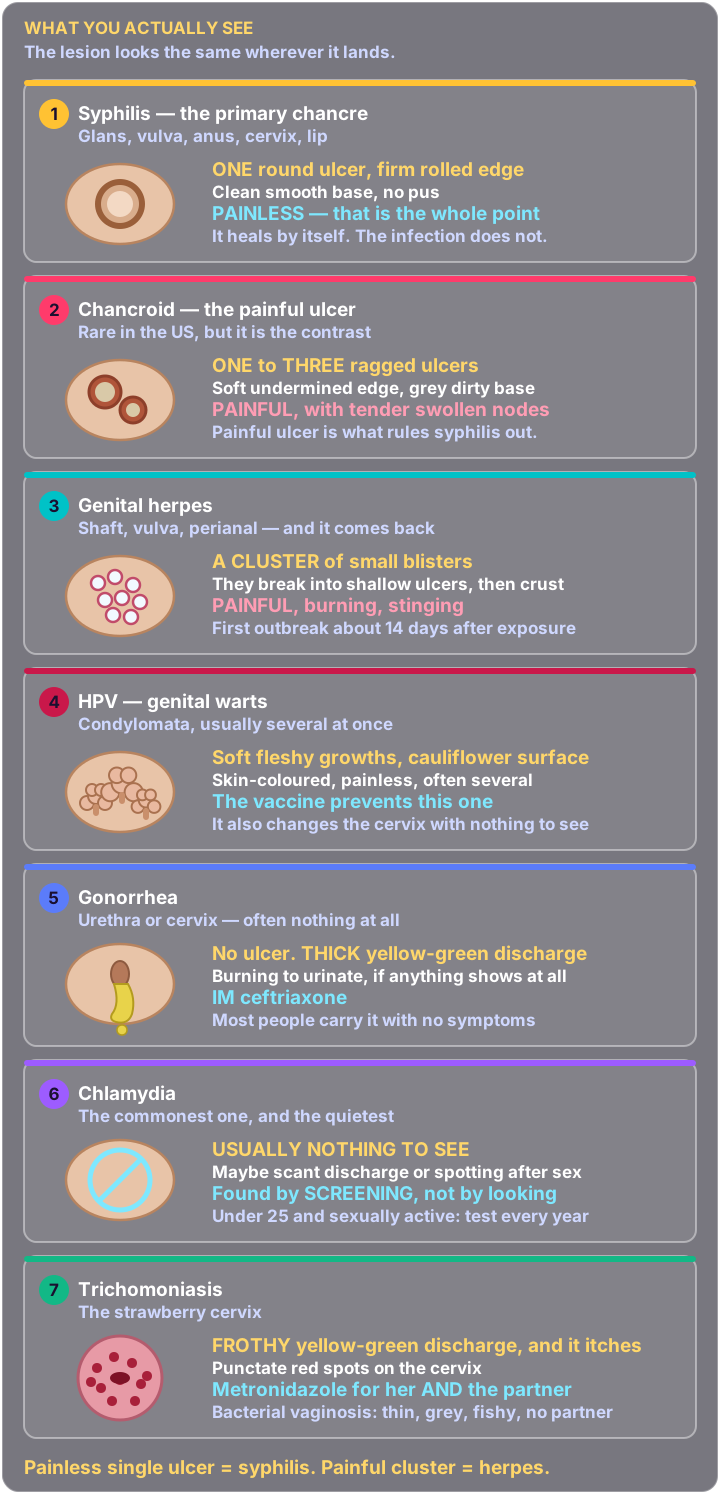
- Painless genital ulcer = syphilis → penicillin. Painful blisters = herpes.
- Endometrial cancer: postmenopausal bleeding is never normal. Unopposed estrogen is the highest risk — including endogenous estrogen from obesity, because fat makes estrogen. Tamoxifen raises risk by stimulating uterine estrogen receptors. Nulliparity, late menopause and early menarche all lengthen estrogen exposure; multiparity is protective.
- Post-void residual: under 50–100 mL normal, 100–300 retention, over 300 significant. Eight hours without voiding and uncomfortable after prostate surgery → bladder scan first. Do not push fluids into a bladder that cannot empty.
Show 5 moreHide these 5
- TURP with CBI: bright red urine with clots means INCREASE the irrigation rate. You are aiming for a rose color. A persistent urge to void alongside the clots is the bladder spasming against an obstructed catheter, not a full bladder. Their analogy — CBI does for the prostatic bed what fundal massage does after birth. Let it run bright red and the catheter clots off, and then you are manually irrigating.
- Sexual assault priority order as taught: consent → emotional support and explanation → exam and documentation → collect and label clothing as evidence. They said the first two are genuinely arguable — but collecting and labeling clothing is never the first action.
- Pre-op priority: allergies — anesthesia, latex, malignant hyperthermia — over jewelry removal. Consent, ID and allergy band top the list.
- Post-op endometriosis surgery: no heavy lifting and nothing in the vagina for 2 weeks. Warm compresses for comfort. Screen for depression — it is chronic, debilitating, and often takes years to diagnose.
- Deteriorating post-op trend: temp
98.6 → 99.5 → 101.2°F, incision clean → red → foul-smelling, pads saturated every6 → 4 → 2hours. Do: vitals and I&O, IV antibiotics, notify. Ambulation, warm compresses to the incision, and oral iron are all wrong — active significant bleeding needs transfusion, not iron.
Show 3 moreHide these 3
- Sildenafil plus any nitrate causes profound hypotension. Question it before giving. Watch for a nitrate buried in a name — amyl nitrite counts. The whole PDE5 group (sildenafil, tadalafil, vardenafil) carries the same interaction.
- One hour post-operative: vital signs first. Not reviewing pre-operative labs, and not infection — infection takes days, not an hour. When a priority question offers something dramatic, run ABC first.
- PCOS: the dietary answer is weight reduction and a low-glycemic diet, because the underlying problem is insulin resistance.
Show 3 moreHide these 3
- Cystocele: pelvic floor exercises, avoid heavy lifting and straining, treat constipation, and lose weight if relevant. Surgery is for what conservative measures do not hold.
- “Avoid sexual activity for 24 hours” is the wrong shape of answer when the underlying problem has not been treated yet. Treat first, then give the timeframe.
- Watch for absolutes. Options containing always, never or only are usually wrong in a medication question, because different clients need different things.
Show 5 moreHide these 5
- The post-op priority ladder, whatever the surgery was: airway → breathing → circulation → neuro → is the gut waking up → is she making urine → then look at the surgical site. They set this one twice.
- They trap this from both sides. A frightening surgery (quintuple bypass, intracranial bleed) with a quiet ABC problem buried in it — do you go to the ABC answer first? Or a clearly stable client with a tempting airway option — do not put oxygen on someone with no airway or breathing problem. Miss neither direction.
- The AND rule. When an option joins two things with and, every part has to be true for the option to be true. “Provide emotional support” alone would rank first in the assault question; “provide emotional support and explain procedures” drops below consent, because you cannot explain a procedure she has not agreed to.
- Radical prostatectomy takes the whole prostate and reattaches the bladder to the urethra — which is exactly why it obstructs. Eight hours without voiding and uncomfortable is obstruction: pushing fluids makes more urine, pain medication only masks it, and ambulating guesses when a bladder scan measures.
- Retention is not just uncomfortable. Urine that never fully leaves the bladder breeds infection and backs pressure up toward the kidneys. That is why a 500 mL post-void residual is a problem and not a wait-and-see.
⚠️ Exam traps
- Expected vs unexpected TURP findings, and remembering the irrigant is excluded from I&O.
- Fibrocystic changes are bilateral, mobile and cyclical; a cancerous mass is single, fixed and non-tender.
⚠️ What it turns into — the complication for each one
The disorder cards below run definition, causes, signs, diagnostics, management and nursing. This is the part they do not have, and it is where the exam lives: so what happens if this is missed or left? Obstruction and metastasis carry most of it — plus the post-operative complications, which is where the exam usually stands.
| Disorder | What it turns into |
|---|---|
| Benign prostatic hyperplasia | Acute urinary retention, UTI, bladder calculi, and back-pressure causing hydronephrosis and renal failure. After TURP: hemorrhage and clot retention, TUR syndrome from absorbed irrigation causing hyponatraemia, incontinence, retrograde ejaculation |
| Prostate cancer | Bone metastasis — pain and pathological fracture. Urinary obstruction; after treatment, incontinence and erectile dysfunction, which she and he need told beforehand |
| Testicular cancer | Spread to retroperitoneal nodes and lungs, and infertility from the disease or its treatment. Highly curable when it is found early, which is the whole argument for self-examination |
| Breast cancer | Metastasis to bone, lung, liver and brain. Lymphedema after axillary node dissection — no blood pressure, venepuncture or injection in that arm, ever. Recurrence, and altered body image |
| Cervical, ovarian and endometrial cancer | Ovarian cancer is usually advanced at diagnosis because the early symptoms are vague — ascites, bowel obstruction, widespread disease. Fistula formation and lymphedema after treatment; infertility |
| Sexually transmitted infections | Pelvic inflammatory disease causing infertility and ectopic pregnancy, and chronic pelvic pain. Neonatal infection during birth. Raised HIV transmission. Untreated syphilis progresses to neurosyphilis and cardiovascular syphilis |
🎈 The reproductive disorders, section by section
Male conditions first, then breast and gynaecological cancers, then the infections. Same six sections every time.
Benign Prostatic HyperplasiaOpenClose
Definition and Overview
Non-cancerous enlargement of the prostate, which sits around the urethra, so as it grows it squeezes the urethra and obstructs the flow of urine. It is a normal consequence of ageing — most men over 60 have some — and it is not cancer and does not become cancer, though the two can coexist. The danger is backpressure: retention, infection, bladder stones and eventually kidney damage.
Causes and Risk Factors
Age and functioning testes are the two requirements; hormonal change with age drives it. Family history, obesity, physical inactivity, diabetes and heart disease increase the risk. Symptoms are made abruptly worse by anticholinergics, antihistamines, decongestants and opioids, and by alcohol and cold weather — a common cause of sudden retention in the emergency department.
Clinical Manifestations
Two groups. Obstructive: hesitancy, a weak or intermittent stream, straining, dribbling at the end, incomplete emptying, and acute urinary retention. Irritative: frequency, urgency, nocturia, and urge incontinence. Acute retention — unable to pass urine, with a distended, tender, palpable bladder and severe discomfort — is an emergency and needs catheterisation now.
Assessment and Diagnostic Findings
Digital rectal examination: a smoothly enlarged, firm, non-tender prostate; a hard, nodular or irregular prostate suggests cancer instead. Symptom scoring, urinalysis and culture to exclude infection, creatinine for renal function, PSA (which BPH also raises, so it is interpreted with care), post-void residual volume by bladder scan, and uroflowmetry. Transrectal ultrasound and biopsy if cancer is suspected.
Medical Management
Mild symptoms are watched. Drugs: alpha blockers (tamsulosin, doxazosin) relax the smooth muscle and work within days, while 5-alpha-reductase inhibitors (finasteride, dutasteride) shrink the gland but take 3 to 6 months. Tadalafil for men with coexisting erectile dysfunction. Surgery when drugs fail or complications appear: transurethral resection of the prostate (TURP) and newer minimally invasive procedures.
Nursing Management and Client Education
Teach the drug specifics, because they decide adherence: alpha blockers cause orthostatic hypotension and dizziness — take the first dose at bedtime and rise slowly, and they cause retrograde ejaculation, which is harmless but alarming if unwarned. Finasteride lowers the PSA by about half, so the lab value must be doubled to interpret it, takes months to work, and must not be handled by anyone who is or may become pregnant — crushed or broken tablets can be absorbed through the skin and cause fetal harm. Behavioral teaching: avoid anticholinergics, antihistamines and decongestants, limit fluid and caffeine in the evening but do not restrict fluid overall, avoid alcohol, do not hold urine, and take time to empty completely. After TURP, expect continuous bladder irrigation: keep the drainage light pink and free of clots, subtract the irrigant from the total output to record true urine, report bright red bleeding with clots, and avoid straining, heavy lifting and sitting for long periods for several weeks.
Prostate CancerOpenClose
🖼️ InfographicsProstate - BPH
Definition and Overview
The most common cancer in men after skin cancer. Most prostate cancers are adenocarcinomas that grow slowly in the peripheral zone of the gland, which is why early disease causes no symptoms at all — urinary symptoms mean the tumor is large or central. It spreads characteristically to bone, especially the spine and pelvis.
Causes and Risk Factors
Age over 50, family history, and Black ancestry, which carries both higher incidence and worse outcomes. Inherited BRCA1 and BRCA2 mutations, and a diet high in red and processed meat and low in vegetables. Obesity is linked to more aggressive disease.
Clinical Manifestations
Usually none in early disease. Later, obstructive urinary symptoms indistinguishable from BPH, haematuria, and painful ejaculation or blood in semen. New back, hip or pelvic bone pain in a man with prostate cancer is bone metastasis until proven otherwise, and new back pain with any leg weakness is possible spinal cord compression — report it the same day. Weight loss and fatigue with advanced disease.
Assessment and Diagnostic Findings
PSA and digital rectal examination for screening, with the decision to screen made jointly with the client after discussing the benefits and the risk of overdiagnosis — typically from age 50, or 45 with higher risk. A hard, irregular, nodular prostate on examination. Transrectal ultrasound-guided biopsy confirms it, and the Gleason score grades it. Bone scan, CT and MRI for staging. Serial PSA to monitor treatment.
Medical Management
Options range widely by stage, grade and life expectancy: active surveillance for low-risk disease in older men, radical prostatectomy, external beam radiation or brachytherapy, and androgen deprivation therapy (LHRH agonists such as leuprolide, antiandrogens, or orchiectomy) for advanced disease, plus chemotherapy and newer hormonal agents. Bisphosphonates or denosumab for bone metastases.
Nursing Management and Client Education
The side effects are intimate and under-discussed — raise them yourself. After prostatectomy or radiation, expect urinary incontinence and erectile dysfunction: teach pelvic floor (Kegel) exercises before and after surgery, explain that continence usually improves over months, and offer referral for erectile dysfunction rather than waiting to be asked. On androgen deprivation therapy, teach the effects honestly — hot flushes, loss of libido, fatigue, weight gain, loss of muscle and bone density and mood change — and add calcium, vitamin D, weight-bearing exercise and bone density monitoring. After brachytherapy, teach the radiation precautions given: avoid close prolonged contact with pregnant people and young children for the specified period, and strain urine for a displaced seed. After prostatectomy, catheter care, no heavy lifting or straining, and no driving while the catheter is in. Teach that new bone pain must be reported. Include the partner in the conversation if the client wishes; this affects both of them.
Testicular CancerHighly curableOpenClose
🖼️ InfographicsProstate & Testicular Cancer
Definition and Overview
A cancer of the germ cells of the testis. It is uncommon overall but the most common solid cancer in men aged 15 to 35 — and it is one of the great success stories of oncology, with cure rates above 95% when found early and still high even with metastatic disease. Which makes early detection worth teaching.
Causes and Risk Factors
Undescended testis (cryptorchidism) is the strongest risk factor, and correcting it does not fully remove the risk. Then family or personal history, White ancestry, a previous testicular cancer in the other testis, HIV infection, and testicular atrophy from mumps orchitis or trauma.
Clinical Manifestations
A painless, firm lump or swelling in the testis, or a feeling of heaviness or dull ache in the scrotum, groin or lower abdomen. The mass does not transilluminate, which distinguishes it from a hydrocele. Occasionally gynaecomastia from hormone-producing tumors. Metastatic disease presents as back pain, a cough or dyspnea, or a supraclavicular node. Young men delay seeking help for this out of fear and embarrassment, and delay is the main reason a curable cancer becomes a difficult one.
Assessment and Diagnostic Findings
Physical examination and scrotal ultrasound. Tumor markers — AFP, beta-hCG and LDH — before surgery, and followed afterwards to detect recurrence. CT of the abdomen, pelvis and chest for staging. A suspicious testicular mass is never biopsied through the scrotum — that risks seeding the tumor; diagnosis is made by removing the testis through an inguinal incision.
Medical Management
Radical inguinal orchiectomy is both diagnostic and the first treatment. Then, by stage and cell type: surveillance, retroperitoneal lymph node dissection, radiation for seminoma, or cisplatin-based chemotherapy, which is what makes even metastatic disease curable. A testicular prosthesis can be placed at the time of surgery or later.
Nursing Management and Client Education
Discuss sperm banking before any treatment begins — chemotherapy, radiation and node dissection can all affect fertility, and this cannot be revisited afterwards. Reassure that one remaining testis usually maintains normal hormone levels, sexual function and fertility; young men assume otherwise and are often too embarrassed to ask. Address body image and offer the prosthesis conversation. After surgery: scrotal support, ice, no heavy lifting for several weeks. Teach the chemotherapy side effects, including that cisplatin is ototoxic and nephrotoxic — report hearing change or tinnitus. Then teach monthly testicular self-examination of the remaining testis, ideally after a warm shower when the scrotum is relaxed: roll each testis between thumb and fingers, feeling for any lump, hardness or change in size, and report anything found. Teach it to every young man you look after, not only this one.
Breast CancerOpenClose
🖼️ InfographicsMastectomy & Breast Surgery
Definition and Overview
The most commonly diagnosed cancer in women. Most arise in the ducts, and behavior depends heavily on receptor status — estrogen receptor, progesterone receptor and HER2 — which decides treatment as much as the stage does. Triple-negative disease lacks all three and is more aggressive. It occurs in men too, which is missed because nobody expects it.
Causes and Risk Factors
Female sex and increasing age are the biggest. Then BRCA1 and BRCA2 mutations and a strong family history, previous breast cancer or atypical hyperplasia, chest radiation in youth, and prolonged estrogen exposure — early menarche, late menopause, nulliparity or first birth after 30, no breastfeeding, and long-term combined hormone therapy. Also obesity after menopause, alcohol, and physical inactivity.
Clinical Manifestations
A hard, painless, irregular, fixed lump — most often in the upper outer quadrant. Then skin dimpling or a 'peau d'orange' orange-peel texture, nipple retraction or a new inversion, spontaneous bloody or clear nipple discharge from one duct, breast asymmetry or a change in contour, and persistent redness or scaling of the nipple (Paget disease). Axillary or supraclavicular nodes. A benign lesion such as a fibroadenoma is usually smooth, mobile, well-defined and often tender — but any new lump gets investigated, not observed.
Assessment and Diagnostic Findings
Mammography for screening, generally annually or biennially from age 40 to 50 by guideline and risk, with MRI added for high-risk women. Diagnostic mammography and ultrasound for a lump, then core needle biopsy, which is what diagnoses it. Receptor testing for ER, PR and HER2 on the specimen. Sentinel lymph node biopsy for nodal staging. CT, bone scan or PET for distant staging, and genetic testing where family history warrants.
Medical Management
Surgery: breast-conserving lumpectomy with radiation, or mastectomy, with sentinel node biopsy or axillary dissection, and reconstruction if the client chooses. Radiation after lumpectomy. Chemotherapy before or after surgery. Hormone therapy for receptor-positive disease — tamoxifen, or an aromatase inhibitor after menopause — usually for 5 to 10 years. Targeted therapy (trastuzumab) for HER2-positive disease, which is cardiotoxic and needs cardiac monitoring.
Nursing Management and Client Education
Lymphoedema prevention after axillary surgery is lifelong teaching, and it belongs on the affected side only: no blood pressure measurement, no venepuncture, no injections and no IV lines in that arm; no tight jewellery or sleeves; protect against cuts, burns and insect bites; wear gloves for gardening and cleaning; report any swelling, heaviness or redness early, because early lymphoedema is far more treatable. Post-operatively, elevate the arm, start the prescribed exercises on schedule, and manage the drain. On tamoxifen, teach hot flushes, and to report abnormal vaginal bleeding — there is an endometrial cancer risk — and leg swelling or pain, because of clot risk. On aromatase inhibitors, teach joint pain and bone loss, with calcium, vitamin D and bone density monitoring. On trastuzumab, teach the cardiac monitoring and to report breathlessness or swelling. Address body image, sexuality and fertility directly — refer for fertility preservation before treatment starts. Teach breast self-awareness rather than a rigid ritual: know how your breasts normally look and feel, and report any change.
Cervical, Ovarian and Endometrial CancerOpenClose
🖼️ InfographicsOvarian & Cervical Cancer
Definition and Overview
The three gynaecological cancers, which behave very differently. Cervical cancer is caused by persistent HPV infection, is preventable by vaccination and detectable by screening long before it becomes cancer. Endometrial (uterine) cancer bleeds early, which is why most cases are found at an early, curable stage. Ovarian cancer has no screening test and no early symptoms, which is why it is usually advanced at diagnosis and has the worst prognosis of the three.
Causes and Risk Factors
Cervical: persistent high-risk HPV, early first intercourse, multiple partners, smoking, immunosuppression and HIV, and not being screened — which is the risk factor most cases share. Endometrial: unopposed estrogen — obesity, nulliparity, early menarche and late menopause, polycystic ovary syndrome, tamoxifen, and estrogen-only hormone therapy — plus diabetes, hypertension and Lynch syndrome. Ovarian: BRCA1 and BRCA2, family history, Lynch syndrome, nulliparity, and increasing age; oral contraceptives, pregnancy and breastfeeding are protective.
Clinical Manifestations
Cervical: silent in the precancerous stage; then postcoital bleeding, intermenstrual bleeding, and a watery or blood-tinged malodorous discharge; then pelvic or leg pain and leg swelling with advanced disease. Endometrial: any postmenopausal bleeding is endometrial cancer until proven otherwise and always needs investigation — it is never dismissed as 'just a period returning'; premenopausally, heavy or intermenstrual bleeding. Ovarian: vague and easily attributed to something else — bloating, abdominal or pelvic discomfort, early satiety, urinary urgency or frequency, persisting for weeks; then ascites and a palpable mass.
Assessment and Diagnostic Findings
Cervical: cervical cytology with HPV co-testing on the screening schedule, then colposcopy and biopsy, and conisation or LEEP for high-grade lesions. Endometrial: transvaginal ultrasound for endometrial thickness and endometrial biopsy, which is diagnostic; dilation and curettage if the biopsy is inconclusive. Ovarian: pelvic examination, transvaginal ultrasound, CA-125 — useful for monitoring rather than screening — CT, and surgical staging, which is often how the diagnosis is made.
Medical Management
Cervical: excision or ablation for precancer; hysterectomy, radical hysterectomy or chemoradiation by stage. Endometrial: total hysterectomy with bilateral salpingo-oophorectomy, with radiation, hormonal therapy or chemotherapy added by stage. Ovarian: surgical debulking followed by platinum and taxane chemotherapy, with PARP inhibitors for BRCA-associated disease.
Nursing Management and Client Education
Prevention and detection are where nursing changes outcomes here. Teach the HPV vaccine for girls and boys, ideally at 11 to 12 and before any sexual activity, and that being vaccinated does not replace screening. Teach the screening schedule and find out why a client has not been screened, because the reasons — cost, transport, past trauma, fear, no interpreter — are usually solvable. Teach every postmenopausal woman to report any bleeding at all, immediately, and teach women on tamoxifen the same. Teach the vague ovarian symptoms and the rule of thumb: bloating or early satiety that persists for more than two or three weeks needs a doctor. After hysterectomy: no heavy lifting, nothing in the vagina and no intercourse for about 6 weeks, report bleeding, fever or foul discharge, and expect surgical menopause if the ovaries were removed — discuss hot flushes, bone health and sexual changes rather than leaving them to be discovered. Address grief over fertility and changes in sexual function, and offer referral.
Sexually Transmitted InfectionsOpenClose
🖼️ InfographicsSexually Transmitted Infections — what each one looks likeSyphilis & ChlamydiaGonorrhea, HSV & HPV
Definition and Overview
Infections passed through sexual contact. Several are silent in most people, especially women, which is why screening rather than symptoms drives detection — and why untreated chlamydia and gonorrhea go on to cause pelvic inflammatory disease, chronic pelvic pain, ectopic pregnancy and infertility. Several are notifiable to public health, and partner treatment is part of curing the client.
Causes and Risk Factors
Unprotected intercourse, multiple or new partners, a partner with an STI, inconsistent condom use, age under 25, alcohol and drug use, transactional sex, and lack of access to care. Having one STI raises the risk of others, including HIV, so a diagnosis of any one is a reason to test for the rest.
Clinical Manifestations
Chlamydia and gonorrhea: often none; otherwise discharge, dysuria, postcoital bleeding, and testicular or pelvic pain. Trichomoniasis: frothy yellow-green discharge with itching. Syphilis: a painless chancre in the primary stage, then a secondary rash including the palms and soles with fever and lymphadenopathy, then years of latency before tertiary damage to the heart and brain. Genital herpes: painful grouped vesicles that ulcerate, with fever and malaise in the first episode, then lifelong recurrences. HPV: genital warts, or nothing at all while causing cervical change. PID: lower abdominal pain, fever, discharge, and cervical motion tenderness.
Assessment and Diagnostic Findings
Nucleic acid amplification testing for chlamydia and gonorrhea, on urine or a swab from every site of exposure — genital, rectal and pharyngeal. Serology for syphilis (RPR or VDRL screening, confirmed by a treponemal test) and for HIV and hepatitis B and C. Wet mount or NAAT for trichomonas; PCR or culture for herpes. Take a sexual history that is specific, routine and non-judgemental — ask about partners, practices and protection the same way you ask about anything else. Screen annually for chlamydia in sexually active women under 25.
Medical Management
Chlamydia: doxycycline, or azithromycin in pregnancy. Gonorrhea: intramuscular ceftriaxone, with resistance now a serious problem. Syphilis: benzathine penicillin G, dose and duration by stage. Trichomonas: metronidazole for the client and the partner. Herpes: antivirals (acyclovir, valacyclovir) shorten episodes and reduce transmission but do not cure. HPV: treat the warts; prevent with vaccination. PID: combination antibiotics covering both organisms, with admission for severe disease. Partner notification and treatment throughout.
Nursing Management and Client Education
Take the sexual history without embarrassment or assumption; your comfort determines whether the client tells you the truth. Teach that the full course must be finished, partners must be treated, and there is no sex until both have completed treatment — otherwise they re-infect each other. Teach condom use for every act, and that condoms reduce but do not eliminate the risk of herpes and HPV, which spread by skin contact. Teach the HPV and hepatitis B vaccines, and offer HIV testing and PrEP where appropriate. Explain that herpes is lifelong but manageable, that transmission can occur without visible lesions, and that suppressive therapy exists — the diagnosis is often experienced as devastating and deserves real time. Reinforce return for a test of cure or re-screening at 3 months where indicated. Keep it confidential, and keep it free of judgement — shame is the reason people do not come back, and not coming back is what causes the complications. Report notifiable infections as required.
🧠 Mind maps 2
One per disorder, built from the structure of your ATI chapter.
🎯 Who gets it
- BV risk rises with new or multiple partners, douching, IUD use, and around menses.
- Candidiasis risk factors include oral contraceptives, corticosteroids, antibiotics, pregnancy, diabetes, or HIV.
- HSV recurrence can be triggered by stress, sun exposure, dental work, fatigue, or poor nutrition.
- Black and Pacific Islander clients face a higher syphilis risk.
👀 What you see
- BV: thin white or gray discharge with a fishy odor; wet prep shows clue cells, pH above
4.5. - Candidiasis: thick, white, cottage-cheese-like discharge with itching; pH under
5, hyphae seen on wet mount. - HSV: painful vesicles that ulcerate and crust within
2 weeks, with tender lymph nodes. - HPV: painless genital warts, sometimes cauliflower-shaped; confirmed by whitening with
3%-5%acetic acid.
🩺 What you do
- HSV has no cure; management focuses on relieving symptoms and reducing recurrence.
- Advise abstaining from sex while HSV lesions are active, and wash hands after contact.
- Syphilis requires abstinence until lesions fully heal, and it is a legally reportable disease.
- Watch for a Jarisch-Herxheimer reaction (headache, fever, tachycardia, myalgia) after syphilis treatment.
💊 Drugs
- OTC antifungals like miconazole and clotrimazole treat uncomplicated candidiasis for up to
7 days. - Prescription antifungals for candidiasis include terconazole or single-dose oral fluconazole.
- Complicated or recurrent candidiasis needs longer or combination antifungal therapy.
- Provider-applied HPV wart treatments include trichloroacetic acid (TCA) and podophyllin resin.
💬 What you teach
- Schedule a pelvic exam
6-10 daysafter the last period, and empty the bladder beforehand. - Perform a testicular self-exam during or after a shower, gently rolling each testicle.
- Discuss prostate screening at age
40for highest risk,45for higher risk, or50for average risk.
⚠️ What goes wrong
- Untreated BV raises risk for other STIs, including HIV, and for pregnancy complications.
- Untreated syphilis can cause blindness or nervous system damage and raises HIV transmission risk.
- Untreated chlamydia or gonorrhea can lead to PID, ectopic pregnancy, and infertility.
- PID can scar the fallopian tubes and lead to tubo-ovarian abscess or peritonitis.
Read left to right: who gets it → what you see → what confirms it → what you do → what goes wrong. Cover a column and rebuild it out loud.
🎯 Who gets it
- Primary amenorrhea risk: genetic/anatomic conditions, Turner syndrome, anorexia, or PCOS.
- Secondary amenorrhea risk: pituitary issues, high or low BMI/body fat, breastfeeding, menopause, PCOS, disordered eating, excess exercise.
- Menorrhagia/metrorrhagia risk: malignancy, fibroids, von Willebrand disease, hormone imbalance, or infection.
- AUB risk: thyroid disease, PCOS, infection, polyps/fibroids, neoplasm, or certain meds.
👀 What you see
- Dysmenorrhea: insomnia, backache, headache, pelvic cramping, nausea, and dizziness.
- Secondary dysmenorrhea adds pelvic pain, painful sex, and bleeding between or after intercourse.
- PMS/PMDD findings start days before menses, ease days after onset; PMDD is more severe.
- PMS/PMDD: irritability, depression, poor focus, mood swings, appetite/fluid changes, headache, back pain.
🧪 What confirms it
- Menorrhagia can drop hemoglobin and hematocrit below expected ranges from blood loss.
- AUB labs may show low Hgb/Hct and a below-normal platelet count.
- Menopause labs: estrogen and progesterone fall while FSH rises.
- Menopause labs: LDL cholesterol tends to rise, HDL may fall.
🩺 What you do
- For dysmenorrhea, offer reassurance plus nonpharm relief: heat, massage, pelvic rocking.
- Dysmenorrhea: anti-inflammatory diet (leafy greens) plus combined analgesic and heat therapy works best.
- For PMS/PMDD, screen for suicidal ideation, since PMDD can be severe.
- PMS/PMDD: refer to therapy, reduce stress, and encourage regular exercise.
💊 Drugs
- Oral contraceptives can reduce how severe PMS and PMDD symptoms feel.
- NSAIDs like ibuprofen ease PMS/PMDD pain by blocking prostaglandin production.
- SSRIs such as fluoxetine and sertraline treat PMS/PMDD mood and physical symptoms.
- Spironolactone helps manage fluid retention from PMS or PMDD.
⚠️ What goes wrong
- Menopause raises osteoporosis risk from bone loss, increasing fracture risk.
- Manage osteoporosis with bisphosphonates, calcium therapy, and weight-bearing exercise.
- Smoking increases embolic risk with HT: MI, stroke, venous thrombosis.
- Long-term HT use may raise breast cancer risk.
Read left to right: who gets it → what you see → what confirms it → what you do → what goes wrong. Cover a column and rebuild it out loud.
🎥 Lecture recordings 4
Tap a card to open that recording in Google Drive. The same list lives in the lecture library.
All NUR 258 recordings →🖼️ Infographics 10
Tap a card to open the matching graphics in your infographic library.
📄 Simple Nursing handouts for this module — 5 of them, straight from your Drive.
📋 Active Learning Templates 2
One per disorder. Every row is filled from that section of the ATI chapter — print it, cover the right, rebuild it.
📋 Infections, Diagnostic, and Therapeutic Procedures for Reproductive Disorders6 parts
Filled from ATI chapter 64, row by row from that chapter’s own sections — 12 of 12 rows have content.
🧭 What it isAlterations in Health (Diagnosis) · Health Promotion & Disease Prevention
Alterations in Health (Diagnosis)
- Surveys reproductive screening exams (breast, pelvic, testicular, prostate), common STIs (bacterial vaginosis, candidiasis, HSV, syphilis, HPV, chlamydia, gonorrhea, trichomoniasis, PID), and related diagnostic and therapeutic procedures like mammography, Pap testing, biopsies, and hysterectomy.
Health Promotion & Disease Prevention
From this module — built from the notes above on this page, not a section of the ATI chapter.
- HPV vaccination — routinely at 11–12, and it prevents cervical, anal, penile and oropharyngeal cancers. For boys as well as girls.
- Hepatitis B vaccination; safer sex, and only condoms reduce STI transmission.
- Treat partners, or reinfection is certain. Expedited partner therapy where the law allows it.
- Screening by risk and age — annual chlamydia and gonorrhea screening in sexually active young women, and cervical screening per guideline.
- Teach breast awareness and testicular self-examination; discuss prostate screening rather than performing it silently.
👀 How it shows upAssessment — Risk Factors · Assessment — Expected Findings
Assessment — Risk Factors
- BV risk rises with new or multiple partners, douching, IUD use, and around menses.
- Candidiasis risk factors include oral contraceptives, corticosteroids, antibiotics, pregnancy, diabetes, or HIV.
- HSV recurrence can be triggered by stress, sun exposure, dental work, fatigue, or poor nutrition.
- Black and Pacific Islander clients face a higher syphilis risk.
- Syphilis primary stage: a painless chancre appears within at least
2 weeks, resolving in3-12 weeks. - Syphilis secondary stage develops
1 week to 6 monthsafter the chancre, with a palm/sole rash. - Syphilis latent phase produces no visible findings at all.
- Syphilis tertiary stage appears
1 to 20 yearsafter infection, with organ damage and possible gummas.
Assessment — Expected Findings
- BV: thin white or gray discharge with a fishy odor; wet prep shows clue cells, pH above
4.5. - Candidiasis: thick, white, cottage-cheese-like discharge with itching; pH under
5, hyphae seen on wet mount. - HSV: painful vesicles that ulcerate and crust within
2 weeks, with tender lymph nodes. - HPV: painless genital warts, sometimes cauliflower-shaped; confirmed by whitening with
3%-5%acetic acid. - Chlamydia is often asymptomatic but can cause mucopurulent cervical discharge and easy cervical bleeding.
- Gonorrhea: yellowish-green vaginal or purulent penile discharge; females are frequently asymptomatic.
- Trichomoniasis: yellow-green, frothy, foul-smelling discharge with strawberry spots on the cervix.
- PID: pelvic pain and tenderness with fever and malaise, plus cervical or uterine tenderness on exam.
🧪 How it is confirmedLaboratory Tests · Diagnostic Procedures
Laboratory Tests
From this module — built from the notes above on this page, not a section of the ATI chapter.
- NAAT is the test for chlamydia and gonorrhea — from urine or a swab, including self-collected.
- Wet mount: clue cells in bacterial vaginosis, motile trichomonads in trichomoniasis, hyphae in candidiasis.
- Vaginal pH — raised above
4.5in bacterial vaginosis and trichomoniasis, normal in candidiasis. - Whiff test — a fishy odor on adding potassium hydroxide points to bacterial vaginosis.
- Serology for syphilis, HIV and hepatitis; wet mount and culture for PID.
- Pregnancy test before treating — several regimens are unsafe in pregnancy.
Diagnostic Procedures
From this module — built from the notes above on this page, not a section of the ATI chapter.
- Pelvic examination with speculum; cervical motion tenderness is the classic sign of PID.
- Pap test and HPV co-testing; colposcopy with biopsy for an abnormal result.
- Pelvic or transvaginal ultrasound for masses, tubo-ovarian abscess and ectopic pregnancy.
- Scrotal ultrasound to distinguish epididymitis from testicular torsion, which is a surgical emergency.
- Mammography, and biopsy of any suspicious breast lesion.
- Before a Pap: no intercourse, douching, tampons or vaginal creams for 24–48 hours, and not during menstruation.
🩺 What you doNursing Care · Medications · Therapeutic Procedures
Nursing Care
- HSV has no cure; management focuses on relieving symptoms and reducing recurrence.
- Advise abstaining from sex while HSV lesions are active, and wash hands after contact.
- Syphilis requires abstinence until lesions fully heal, and it is a legally reportable disease.
- Watch for a Jarisch-Herxheimer reaction (headache, fever, tachycardia, myalgia) after syphilis treatment.
- HPV can still spread to partners even after visible warts have cleared.
- Retest for chlamydia or gonorrhea within
3 monthsof finishing treatment. - Tell chlamydia or gonorrhea partners from the past
60 daysto get tested and treated. - Doxycycline can lower oral contraceptive effectiveness, so recommend backup protection.
- Chlamydia, gonorrhea, and syphilis are all legally reportable diseases in every state.
Medications
- OTC antifungals like miconazole and clotrimazole treat uncomplicated candidiasis for up to
7 days. - Prescription antifungals for candidiasis include terconazole or single-dose oral fluconazole.
- Complicated or recurrent candidiasis needs longer or combination antifungal therapy.
- Provider-applied HPV wart treatments include trichloroacetic acid (TCA) and podophyllin resin.
- Client-applied HPV wart treatments include podofilox and imiquimod.
- HPV lesions can also be removed with cryotherapy, surgical excision, or laser therapy.
- HIV-positive females should have cytology screening within
1 yearof sexual activity, repeated at6 months. - After
3consecutive normal Pap results, HIV-positive clients can screen every3 years.
Therapeutic Procedures
- BV's recommended treatment is oral or intravaginal metronidazole, or intravaginal clindamycin cream.
- HSV antivirals (acyclovir, valacyclovir, famciclovir) shorten outbreaks and can suppress recurrence.
- Syphilis treatment is a single IM dose of benzathine penicillin G, or
3weekly doses if duration is unknown. - Penicillin-allergic syphilis clients can take oral doxycycline or tetracycline instead.
- Chlamydia treatment is oral doxycycline for up to
7 days, or single-dose azithromycin. - Gonorrhea treatment is a single IM dose of ceftriaxone; treat for chlamydia too if it's also positive.
💬 Around the patientClient Education · Interprofessional Care
Client Education
- Schedule a pelvic exam
6-10 daysafter the last period, and empty the bladder beforehand. - Perform a testicular self-exam during or after a shower, gently rolling each testicle.
- Discuss prostate screening at age
40for highest risk,45for higher risk, or50for average risk. - An initial PSA below
2.5 ng/mLoften only needs retesting every2 years. - A PSA at or above
2.5 ng/mLusually prompts yearly retesting. - Draw PSA before a digital rectal exam, since palpation can falsely raise the level.
- Avoid vaginal medication, douching, or intercourse for
24 hoursbefore a Pap test.
Interprofessional Care
From this module — built from the notes above on this page, not a section of the ATI chapter.
- Gynecologist or urologist for structural disease, and for surgical management of PID complications.
- Sexual health clinic for testing, treatment and partner notification.
- Public health — several STIs are notifiable, and contact tracing starts there.
- Pharmacist for regimen choice in pregnancy and for interactions.
- Social work and counseling — screen for coercion and intimate partner violence, which often surfaces at an STI visit.
- Fertility services where PID has caused tubal damage.
⚠️ What goes wrongComplications
Complications
- Untreated BV raises risk for other STIs, including HIV, and for pregnancy complications.
- Untreated syphilis can cause blindness or nervous system damage and raises HIV transmission risk.
- Untreated chlamydia or gonorrhea can lead to PID, ectopic pregnancy, and infertility.
- PID can scar the fallopian tubes and lead to tubo-ovarian abscess or peritonitis.
- Hysterosalpingography is timed
6-11 daysafter the last period to limit pregnancy or menses interference. - Cervical biopsy works best early in the menstrual cycle, when the cervix is less vascular.
- After cervical or endometrial biopsy, avoid intercourse and vaginal insertions for about
2 weeks.
📋 Reproductive Physiologic Processes6 parts
Filled from ATI chapter 65, row by row from that chapter’s own sections — 12 of 12 rows have content.
🧭 What it isAlterations in Health (Diagnosis) · Health Promotion & Disease Prevention
Alterations in Health (Diagnosis)
- Covers the hormonal reproductive cycle and common menstrual disorders: dysmenorrhea, PMS/PMDD, amenorrhea, abnormal uterine bleeding, and perimenopause/menopause, including expected findings, diagnostic workup, nursing care, and hormone therapy considerations.
Health Promotion & Disease Prevention
From this module — built from the notes above on this page, not a section of the ATI chapter.
- Age-appropriate screening: cervical, breast and prostate discussion per guideline.
- HPV and hepatitis B vaccination; safer sex and STI screening by risk.
- Teach breast awareness and testicular self-examination.
- Preconception care: folic acid, immunity check, and review of existing medicines.
- Menopause: bone health, cardiovascular risk and symptom management discussed rather than endured.
👀 How it shows upAssessment — Risk Factors · Assessment — Expected Findings
Assessment — Risk Factors
- Primary amenorrhea risk: genetic/anatomic conditions, Turner syndrome, anorexia, or PCOS.
- Secondary amenorrhea risk: pituitary issues, high or low BMI/body fat, breastfeeding, menopause, PCOS, disordered eating, excess exercise.
- Menorrhagia/metrorrhagia risk: malignancy, fibroids, von Willebrand disease, hormone imbalance, or infection.
- AUB risk: thyroid disease, PCOS, infection, polyps/fibroids, neoplasm, or certain meds.
- AUB medication risk factors include hormonal contraceptives and anticoagulants.
Assessment — Expected Findings
- Dysmenorrhea: insomnia, backache, headache, pelvic cramping, nausea, and dizziness.
- Secondary dysmenorrhea adds pelvic pain, painful sex, and bleeding between or after intercourse.
- PMS/PMDD findings start days before menses, ease days after onset; PMDD is more severe.
- PMS/PMDD: irritability, depression, poor focus, mood swings, appetite/fluid changes, headache, back pain.
- Menorrhagia: soaking a pad/tampon hourly, night changes, clots, and anemia signs like fatigue or dizziness.
- Menorrhagia can cause activity restriction and bleeding between regular cycles.
- Menopause vasomotor findings: hot flashes with diaphoresis, disrupting sleep and causing fatigue.
- Menopause genitourinary findings: atrophic vaginitis, painful sex, rising vaginal pH from dryness.
🧪 How it is confirmedLaboratory Tests · Diagnostic Procedures
Laboratory Tests
- Menorrhagia can drop hemoglobin and hematocrit below expected ranges from blood loss.
- AUB labs may show low Hgb/Hct and a below-normal platelet count.
- Menopause labs: estrogen and progesterone fall while FSH rises.
- Menopause labs: LDL cholesterol tends to rise, HDL may fall.
Diagnostic Procedures
- Dysmenorrhea workup: provider pelvic exam, pelvic ultrasound, or laparoscopy to rule out pathology.
- AUB workup: pelvic exam plus endometrial biopsy to link bleeding with hormone cycle or cancer.
- Menopause: Pap-inclusive pelvic exam evaluates any abnormal bleeding for cancer.
- Endometrial biopsy is done for unexplained bleeding or bleeding starting after
1 yearwithout menses. - DXA bone density scan checks osteoporosis risk in menopausal clients.
🩺 What you doNursing Care · Medications · Therapeutic Procedures
Nursing Care
- For dysmenorrhea, offer reassurance plus nonpharm relief: heat, massage, pelvic rocking.
- Dysmenorrhea: anti-inflammatory diet (leafy greens) plus combined analgesic and heat therapy works best.
- For PMS/PMDD, screen for suicidal ideation, since PMDD can be severe.
- PMS/PMDD: refer to therapy, reduce stress, and encourage regular exercise.
- PMS/PMDD diet: avoid caffeine, high-fat/sodium foods, and refined sugar; favor whole grains, fruit, veg.
- Reassure clients with AUB and provide condition education.
- Teach menopausal clients to report any vaginal bleeding right away.
- Vaginal estrogen is preferred for atrophic vaginitis since it limits systemic absorption.
- For dyspareunia from vaginal dryness, recommend a water-soluble lubricant.
Medications
- Oral contraceptives can reduce how severe PMS and PMDD symptoms feel.
- NSAIDs like ibuprofen ease PMS/PMDD pain by blocking prostaglandin production.
- SSRIs such as fluoxetine and sertraline treat PMS/PMDD mood and physical symptoms.
- Spironolactone helps manage fluid retention from PMS or PMDD.
- Hormonal contraceptives regulate cycles and reduce AUB bleeding severity.
- Conjugated estrogens can manage or reduce AUB bleeding.
- Oral iron supplements treat anemia from AUB-related blood loss.
- Menopausal HT contains estrogen alone or estrogen plus progestin.
Therapeutic Procedures
- Secondary dysmenorrhea treatment targets the underlying pelvic pathology.
- Amenorrhea management depends on identifying and treating the underlying cause.
- Menorrhagia treatment varies widely depending on its underlying cause.
- D&C diagnoses and treats AUB by dilating the cervix and scraping the uterine lining for lab exam.
💬 Around the patientClient Education · Interprofessional Care
Client Education
From this module — built from the notes above on this page, not a section of the ATI chapter.
- The menstrual cycle: follicular, ovulation around day 14 counting back from the next period, then luteal.
- Fertility signs: basal temperature rising
0.4–0.8°Fafter ovulation; mucus becoming thin, clear and stretchy. - What is not normal: bleeding between periods, after intercourse, or after menopause; severe pain that stops daily life.
- Menopause is confirmed after
12 monthswithout a period; hot flushes, sleep disturbance and vaginal dryness are treatable. - Any bleeding after menopause is investigated.
Interprofessional Care
From this module — built from the notes above on this page, not a section of the ATI chapter.
- Gynecologist or urologist for structural and hormonal problems.
- Reproductive endocrinology for infertility.
- Menopause or sexual health clinic for symptom management.
- Mental health — reproductive problems carry grief and identity distress that is rarely raised unprompted.
- Physiotherapy for pelvic floor dysfunction.
⚠️ What goes wrongComplications
Complications
- Menopause raises osteoporosis risk from bone loss, increasing fracture risk.
- Manage osteoporosis with bisphosphonates, calcium therapy, and weight-bearing exercise.
- Smoking increases embolic risk with HT: MI, stroke, venous thrombosis.
- Long-term HT use may raise breast cancer risk.
- Long-term estrogen-only HT may raise ovarian and endometrial cancer risk.
📝 Notes & key concepts
The lines from this module that carry a number, a dose or an absolute rule — the ones that decide questions. Everything else is on the cards above.
- Pap every
3 yearsroutinely (yearly if indicated). No douching, vaginal meds or intercourse for24 hrbeforehand. A total hysterectomy (uterus + cervix out) means no more Paps. - BSE monthly, 5–7 days after menses, easiest with soapy skin in the shower using fingertips. Clinical exam
q3 yrages 20–39, then yearly at 40+. Screening mammography yearly fromage 40. - Ovarian cancer is the silent one — vague bloating, early satiety, pelvic pain, so it presents late. CA-125 tracks disease but is not a screening test. Endometrial cancer announces itself with post-menopausal bleeding, which is why it is caught earlier; tamoxifen and estrogen dominance are risk factors.
- PCOS needs 2 of 3: hyperandrogenism, chronic anovulation, polycystic ovaries on ultrasound. Metformin regulates cycles, spironolactone reduces hirsutism, OCPs balance testosterone.
- Hysterectomy: the priority post-op concern is hemorrhage, not airway. Excessive bleeding = one pad saturated in
4 hours. Foley stays24 hr; anti-embolism stockings pre-op. - STI workup: cervical swab (not blood, not urine); ask duration first (months of symptoms suggests PID); treat partners; pelvic ultrasound only if PID is suspected. HPV vaccine at
11–12, available ages 9–26. - BPH is enlargement, not cancer. Finasteride shrinks the prostate but takes up to
6 monthsand pregnant women must not handle it. Tamsulosin relaxes the outlet — warn about orthostatic hypotension during nighttime voiding. - TURP/CBI: three-way catheter; the irrigant is NOT counted in I&O; titrate the rate to keep urine pink or lighter; never run CBI on an IV pump. Expected: pink-tinged urine and a constant urge to void. Unexpected: bright red urine and bladder spasms → check for kinks and clots, increase the irrigation rate, then manually irrigate; call the provider if that fails. No heavy lifting, straining or intercourse for
2–6 weeks. - Prostate cancer metastasizes to bone — new back or hip pain with weight loss may be the first sign. Testicular cancer: painless lump in men 15–35, highly curable, monthly self-exam; markers AFP, beta-hCG, LDH. ED can be an early marker of vascular disease; PDE5 inhibitors are contraindicated with nitrates.
- Sildenafil interactions they tested: nitroglycerin, amyl nitrate, and doxazosin. Recognize "-afil" as PDE5. Acetaminophen and amoxicillin are safe.
- Endometrial cancer: postmenopausal bleeding is never normal. Unopposed estrogen is the highest risk — including endogenous estrogen from obesity, because fat makes estrogen. Tamoxifen raises risk by stimulating uterine estrogen receptors. Multiparity is protective.
- Post-void residual: under 50–100 mL normal, 100–300 retention, over 300 significant. Not voiding post-prostatectomy → bladder scan first, do not push fluids.
- Sexual assault priority order as taught: consent → emotional support and explanation → exam and documentation → collect and label clothing as evidence. They said the first two are genuinely arguable.
- Pre-op priority: allergies — anesthesia, latex, malignant hyperthermia — over jewelry removal. Consent, ID and allergy band top the list.
🎯 Module quiz
Questions for this module. They also feed the Mega Quiz.
Nothing here yet — drop it in when you have it